|
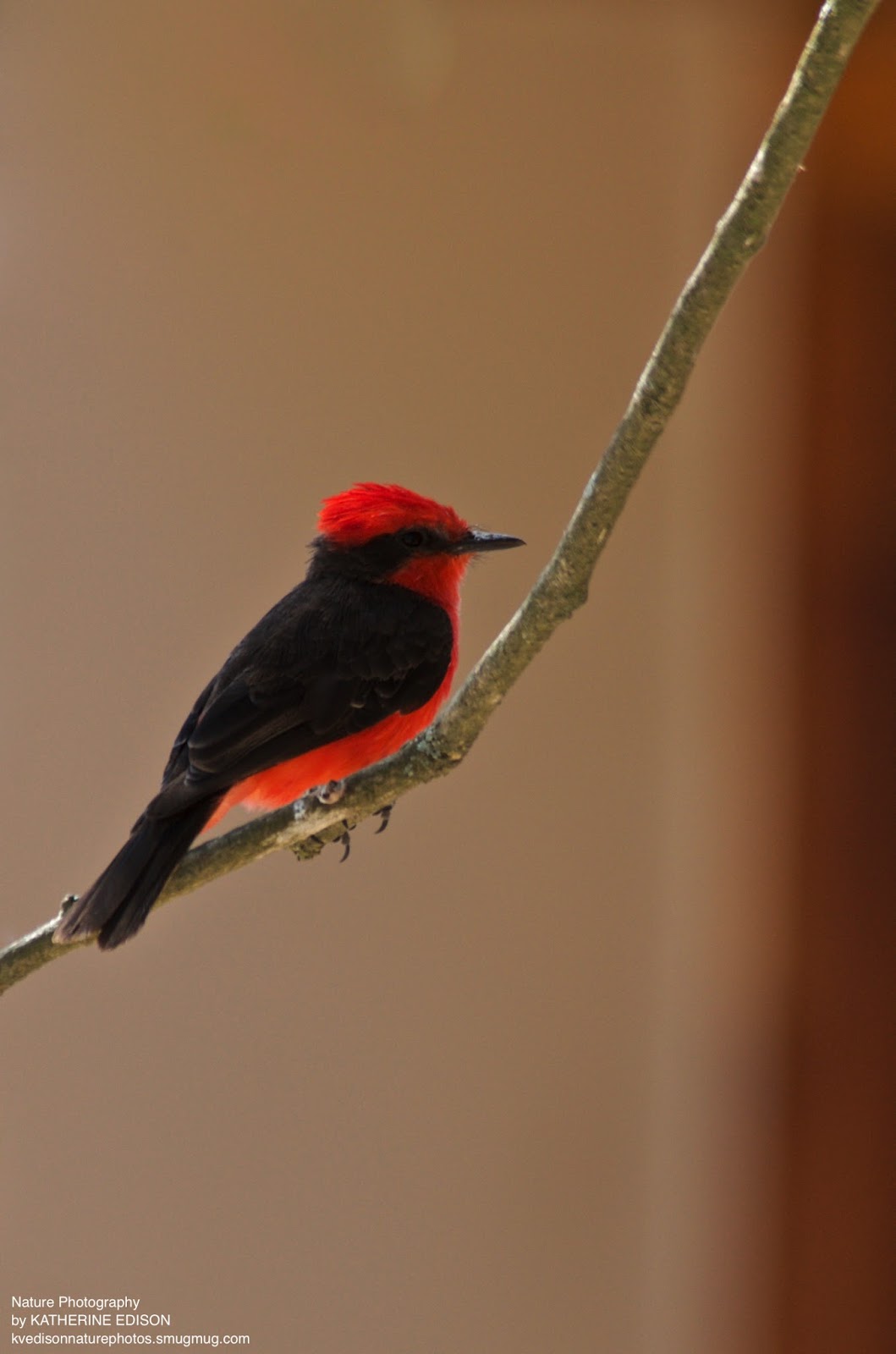
| Galapagos Yellow Warbler |
Now where was I? Oh yes, the rest of our 8 day tour of the Galapagos Islands! Refer to my previous post if you missed the details of the first days.
On day 4 we got out very early and headed for Punta Pitt, near San Cristobal. We hiked a narrow and rocky trail to high, dry territory. The scenery reminded me a bit of Southern Utah. The rocks were even reddish brown in some parts of the island. The structure of the island is compressed ash, tamped down by rain. We saw frigate birds and pelicans overhead and lots of Red-footed Boobies on nests. There are two "phases" of Red-footed Booby and we saw both the white phase and the brown phase of these birds. There were also plenty of Blue-footed Boobies and we saw a pair that we thought might be courting because they were doing a little dance. Mockingbirds and Yellow Warblers moved among the bigger birds, searching for food. The red leaves of the carpetweed made a beautiful backdrop for the pretty birds.
 |
| Red-footed Boobies, White and Brown Phase |
I skipped the afternoon snorkel that day because I was tired, but I rode along in the dinghy and saw dozens of Marine Iguanas and Crabs clinging to the rocks at the waterline. There were also some shorebirds near the rocks--Ruddy Turnstones and Sanderlings. My husband reported that the fish underwater were more spectacular than ever. Figures!
In the afternoon we took a very long hike on San Cristobal to the "Galapaguera", where the San Cristobal Tortoises can be found. It was hot and dry that day and hiking was difficult as we were walking over large lava rocks much of the time. We saw 10 or more tortoises along the way and at the end of the trail. We were visiting in the dry season and food was hard to find for most of the animals on the island. Many of the trees were bare but would leaf out again when the rains started. We saw lots of dried tortoise scat and it wasn't clear to me if the tortoises were eating dried leaves or if this was left from last season. We saw signs of the goats that are exotic pests on the island, competing with the tortoises for food. The goats are very difficult to catch or control. We also saw San Cristobal Mockingbirds and several finches.
 |
| San Cristobal Galapagos Tortoise at the Galapaguera |
On day 5 we swam and then traveled. Our big adventure was snorkeling around Leon Dormida, aka Sleeping Lion or Kicker Rock. The rock is far off shore from San Cristobal and the water is deep and cold. The waves are also rather rough, rocking up against the huge rock. I decided to wear a life jacket and it turned out to be a mixed decision. On the one hand, I had some extra buoyancy when I felt out of my element (which was most of the time because I am not a great swimmer), but on the other hand the jacket made me bob around like a cork and it was hard to direct myself against the waves. But nonetheless, our group made our way around and between the huge rocks. The colors were stunning. Steep rock walls were covered with bright, fat starfish, coral and urchins. And huge schools of colorful fish of many sizes and shapes, including pufferfish, swam past our group, sometimes close enough to touch. We also saw a Sea Turtle and 2 Sharks, and we were pretty sure that the larger of the two was a Galapagos Shark. It was very exciting but kind of scary, too, and I decided to limit the rest of my snorkeling to areas where I could touch or at least see the ocean floor.
 |
| Leon Dormida (Sleeping Lion)--if you look carefully you can see the lion's head on the right, its haunches in the middle, and its tail is the pointy rock to the left |
Day 6 took us to the island of Española, at Punta Florez. We were up and exploring very early, even though we were tired after snorkeling the day before. But our guide explained to us that we had to be off of the island by 10am so that the National Park could bring in their own groups of tours, and the number of visitors at any time is limited. Just as well--we were met at the dock by noisy Sea Lion mamas and lots of young babies. Several appeared to have been born that morning. It's good to be out early! The mother Sea Lions stay close to their newborns for several weeks, letting the babies get to know their call and scent. After that they can leave the babies on their own while they hunt for fish. Click
here for a video of the sea lions. Just past the sea lions were big piles of pinkish Marine Iguanas that we had to shuffle through the just to walk to the trail. The Iguanas were fairly passive, mainly just sunning themselves. But we did see a few that were interested in the placentas of the newborn Sea Lions. Our guide told us that though the Iguanas were primarily vegetarians, they would eat the placentas for the valuable moisture in an extremely dry environment. A little further down the path we found a rather gruesome looking Española Mockingbird and an Iguana partaking in a bloody drink.
 |
| Newborn Baby Sea Lion |
 |
| Iguana Road Block |
 |
| Getting Moisture |
An interesting thing about the Española Mockingbirds is that they have learned to associate tourists with water and will tap on the lids of water bottles and pester people for drinks, mewling piteously. Even though we were supposed to stay 2 meters away from the wildlife and not touch or bother them, it was hard to avoid birds that came up to us! They are unafraid of people and will poke around gear and climb into bags and backpacks. They are very smart.
There were lots of wonderful birds and more Marine Iguanas at every bend in the path. We had our first view of Albatrosses up close and saw some of their scruffy chicks. Near the end of the hiking loop we stood on the edge of a sheer cliff wall and watched water spouting up from a natural blowhole in the lava rock. Albatrosses, Masked Boobies, Frigatebirds and Tropicbirds flew and hovered in the wind. You can watch the soaring birds
here. We watched a Yellow Crowned Night Heron chasing after Sally Lightfoot Crabs and saw a big Galapagos Hawk cruise overhead.
 |
| Masked Boobies with Carpetweed Background |
 |
| Waved Albatross Chick |
Later that afternoon we swam at a beautiful beach called Bahia Gardener. We saw more sharks, some rays and a sea turtle. The Española Mockingbirds there were rather cheeky and rifled through our bags. A Galapagos Flycatcher and a Lava Lizard tried to join in, too. It is so strange being around animals that don't fear us (that aren't raccoons!). I saw a Wandering Tattler at this beach, and watched a Marine Iguana gnawing on the seaweed growing on a rock.
 |
| Española Mockingbird Thugs |
That night we had rocky seas as we traveled to Floreana. The boat rolled back and forth and sometimes I felt like I would be rolled out of bed and right onto the floor. Happily, I didn't feel especially sick, just tossed and turned. When we motored at night the pelagic birds followed alongside the boat. I could see the white forms of Swallowtail Gulls, Boobies and Albatrosses moving just outside the window of our cabin. It reminded me of the cyclone scene in the Wizard of Oz movie, with the rocking chair and wicked witch and cow floating by as Dorothy watches from the swirling house.
Day 7 took us to Floreana at Punta Cormoran, where we started the morning by walking around a brackish pond that was home to a few American Flamingoes and some Pintail Ducks. From there we walked to a soft sand beach with Sea Turtle tracks and nests. There were Sanderlings, Ruddy Turnstones and a Semi-palmated Plover. Back at the landing beach, we watched diving Pelicans compete for fish with Boobies and Penguins and Sea Lions. Click
here for a short video.
 |
| Pelican With a Full Pouch and Penguin Nearby |
That afternoon we visited the "Post Office" at Floreana, which is really a barrel full of postcards. Folklore has it that the pirates and whalers would leave an addressed letter in the barrel and anyone coming through would look through the letters and if they found any addressed to the place they were going, they would take it and deliver it in person. The modern version is for tourists to leave post cards and take one or two home with them, but Art and I didn't get the message and had no post cards when the time came, so we wrote notes to our daughters on folded paper with the address on the outside. And amazingly enough, one of the letters made it to Brooklyn! Time will tell if the the other, going to Arkansas, makes it. We delivered 2 cards when we got back home to Georgia. After the mail, we swam. The final snorkel trip of the cruise that afternoon was my favorite. We were in shallow and clear waters and swam with Sea Turtles and Penguins. They are fast and fun! What a blast! I wish we had photos, but the good memories are lasting.
 |
| Sea Turtle |
Day 8, the last day, was a little melancholy because the trip had been such a special experience. For one final excursion before our flight out, we took a quick tour of the Darwin Research Station on Santa Cruz and saw examples of some of the other kinds of tortoises from islands we didn't have a chance to visit. It was also good to learn a little about some of the research and conservation projects going on in the Galapagos Islands. They're doing great work caring for these world treasures. It is an extremely difficult job, but it is clear that they love and care about the islands very much. I feel so fortunate that I was able to visit them myself.
 |
| Saddleback Galapagos Tortoise |
 |
| One Research Project at Darwin Station |
 |
| Fabulous |
These are only a few photos from the trip, but if you are interested in seeing more, you can see them
here on my photo website. Thank you for reading and watching.