Showing posts with label Sandy Creek Nature Center. Show all posts

Monday, September 4, 2023

Fall Favorites

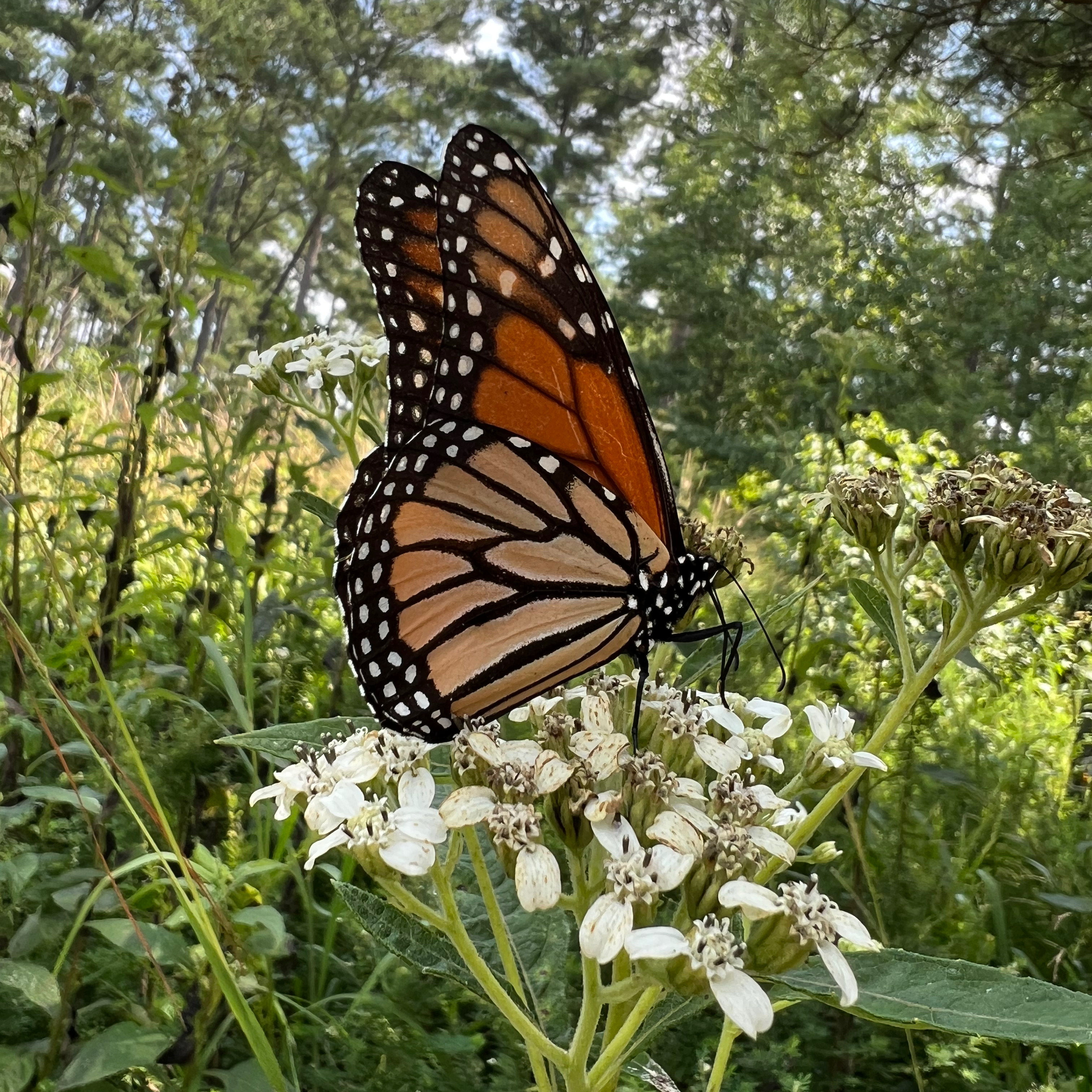
Monarch

There are miles of trails to walk at Sandy Creek Nature Center, a wonderful nature park in Athens, Georgia, where I like to spend a lot of time, and where I also volunteer. I find that each trail there is special for different reasons. Some are just peaceful and beautiful. Others are good for finding certain birds, or flowers or fungi, or to hear the whack of a beaver tail at dusk. Some trails have good logs to roll and look for salamanders, some trails lead to the creek, and others have good loops to walk with school kids. I like them all. But in the fall, my favorite trail is also the shortest, the loop that runs through the restored Piedmont Prairie--a small and sunny, open space, filled with wildflowers and tall grasses. A haven for insects and spiders, birds, snakes, frogs, rabbits and rodents. This trail can take you two minutes or two hours, depending on how much time you want to spend looking and listening. I find that it is a perfect element to include in a hike with 4th Grade classes who have come to learn about the solar system and see a planetarium program. On our trail hike, I like to talk to the kids about the changing seasons and how the living things are preparing for winter. The leaves on the trees are changing color. Fruit on the trees and vines and grasses and flowers are ripening. Birds are feeding on the flowers and grass seeds as they prepare for migration. Spiders that hatched in the spring are now reaching maturity, their webs stretched across paths and loaded with insects. Their egg sacs will appear as the weather cools. There's always a lot to see. I think that the kids have a good time, and hopefully they learn a lot. I try to share my enthusiasm, too, because I love it all. But I also have a special love for butterflies, so I hype that up a lot. And, the Prairie in the fall also happens to be a great place for seeing butterflies, which makes it one of my favorite places to visit and share. 


Leaf footed bugs and nymphs on Passion Vine

Poke Berries

Empty Cicada shell

Green Lynx Spider

Robber Fly

The loop through the Prairie is a different experience every year. One year you will find Praying Mantises hiding in the tops of the tall plants. In another, Bird Grasshoppers pop every which way across the trail and over the tall grasses. Or the Orbweaver Spiders may have staked out stations along the entire trail, hiding behind the zigzags in their webs. This year, Passion Vines grew in profusion, attracting Gulf Fritillary butterflies in large numbers, and growing so robustly that they covered the path. Passion Vine is the host plant for the Gulf Fritillary butterfly, and they come to lay their eggs on this particular plant. The park naturalists closed the loop for a few weeks to give the tiny Fritillary caterpillars a chance to eat and grow and go through their metamorphosis. Left undisturbed, butterflies of all kinds busily fed on the Passion Flowers, Frostflowers, Milkweed, Thistles, and other nectar plants. 

Gulf Fritillary, drinking nectar

Gulf Fritillary caterpillar on Passion Vine tendril

Passion Flower

Mating Fritillaries next to empty Chrysalis

Fruit from Passion Vine

Last week I took 2 groups of energetic 4th graders on a larger loop through the woods that ended with a walk through the Prairie. As we cleared the shady forest and entered into the sunny and grassy area with its tall flowers, I prepped the kids by telling them how that they were about to experience something spectacular. And both times, as we came near, I knew that they were suitably impressed. I could tell by all the squeals and wows! I get it, because I feel the same way, every time. There is something magical about walking into a butterfly meadow.  We saw dozens of yellow and black Eastern Tiger Swallowtails, (the state butterfly of Georgia, by the way) and many, many Gulf Fritillaries, as well as a Monarch, a Viceroy, various Skippers, Satyrs, Azures, Hairstreaks, and a Red Spotted Purple. It was a great show and gave me a chance to fit in my standard message about how important it is to have green spaces--sanctuaries for nature, as well as for people. This is an important lesson for preparing the way for the next generation of environmental stewards. You protect the things you know. And who wouldn't want to protect a magical place like this? 


Silver Spotted Skipper

American Painted Lady and Ailanthus Web Worm Moth

Clouded Skipper

Eastern Tiger Swallowtail (female, dark form)

Red-spotted Purple

Eastern Tiger Swallowtail (male)


Wednesday, July 10, 2019

Up to the Challenge

Acadian Flycatcher in the treetops

We're well into July and I think I'm finally getting back into my normal routine. But for the month of June, I was somewhat possessed, after immersing myself in this year's June Birding Challenge. Everything but the pursuit of my list of target birds took a back burner--family, garden, friends, laundry, bills, cleaning, eating, and even personal grooming! I became single minded, scarfing meals on the run while I tracked reports on ebird and mapped my daily excursions. Most nights I dropped off to sleep, completely exhausted after walking for hours in the heat, binoculars and camera around my neck. And I had a blast! Luckily my husband was out of town for a chunk of this, or he would have felt ignored. I know the dog did.

Walking the Trails through the Woods

For those who have not read about this in my previous posts, the June Challenge is a friendly birding competition put on by the Alachua County Florida Audubon chapter. The goal is to see (not just hear) as many wild bird species within the county limits as possible. Because it is a friendly competition, people share information when they find a special or rare bird and the more experienced birders lead several field trips to help everyone see as many as possible. It's a lot of fun and I looked forward to June when I lived in Florida. Since moving to Georgia, I have tried to keep participating on my own but have (so far) not been able to convince anyone to join me. Maybe one of these years I'll get some converts and this can become a thing in Athens, too.

American Kestrel

For the past few years I had assumed that I was at a disadvantage birding up here because Clarke County is so much smaller (about 1/10th the size) than Alachua County, so I allowed myself to expand the search territory. But this year I looked on ebird at the list of birds that might be found here in June and was delighted to see that the numbers were higher than I had thought. If I managed to see every bird on the list (extremely unlikely) my numbers could be pretty respectable. Of course, the folks in Gainesville will always be way ahead of me. They have a whole lot more birds available down there, especially the wading birds, and lots of expert birders, and I am no expert. But I decided to give it a try, sticking just to my county, and anyway, as I remind myself every year, the experience is so much more than just checking birds off my list.

Orb Weaver

As always with the June Challenge, I found new parks and natural areas to explore. This year I spent a lot of time on the North Oconee River Greenway and in Southeast Clarke Park and visited the Lake Herrick/Oconee Forest Park several times a week. And I finally bought an annual pass to Sandy Creek Park, one of our county nature parks. I am coming to appreciate that for a small county, we have a wonderful number of natural areas. I have more to explore in Junes to come.

Box Turtle peeks out of the English Ivy

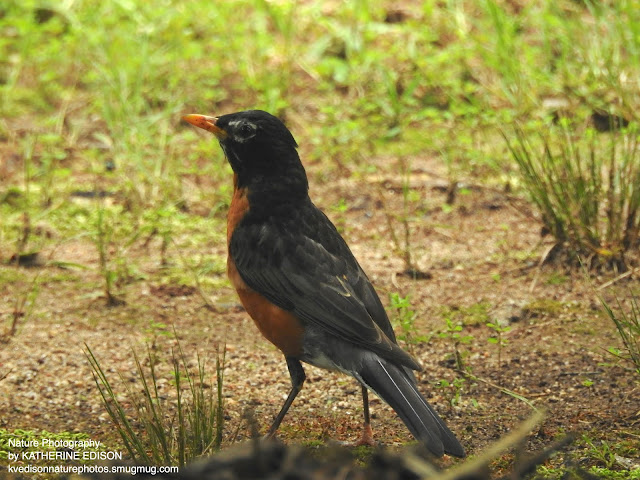
We may not have all the fancy and abundant wading birds up here that Florida has, like the Spoonbills and Ibises, or water birds like Anhingas and Gallinules, but we have our own specialties. Grey Catbirds and Brown Headed Nuthatches take a little planning to find in Gainesville but I have them both in my backyard feeders. Canada Geese poop all over the fields near my house--not so common for the Alachua folks. Robins--we have Robins a-plenty, all year. People get excited when they find them down in Florida in June. And I see a Hairy Woodpecker just about every year, which I never did in Florida. But I think the only unique bird I had that they won't find down there at all is the White Breasted Nuthatch, another one that visits my yard feeders.

Canada Geese

Robin

White-breasted Nuthatch

On my excursions (BTW, I averaged about 10,000 steps daily for the month, even though there were days I did not go out birding) I encountered not only birds, but rabbits, deer, beavers, a groundhog, armadillos, squirrels, turtles, snakes, lizards, frogs, toads, a salamander, spiders, butterflies, bees, wasps, fungi and slime mold. I found living things and dead. I saw things that were funny and strange and sad. I saw beautiful wildflowers and fireflies and heard the sounds of the cicadas and baby owls. I was out in the sun and rain with walkers and runners, dogs and children. I birded in the morning and evening but mostly in the heat of the day because I can never get my act together for an early morning outing. But the most important thing was that I was outside enjoying nature just about every day. What a great diversion from all the bad news these days. It made me feel so alive and in love with the world.

A Turtle with a Drafonfly on its nose

Great Blue Heron photobombed by a Beaver

Just the Head of an Opossum. Nothing else. Probably from an owl or hawk meal.

This Juvenile Owl and its sibling hissed so much that I finally saw them. Otherwise, my June would have been Owl-less.

In all I counted 75 birds. I tried but never did see a Scarlet Tanager, even though there was one in my yard in May. I expected to find a Nighthawk, but never heard one. I know I see them flying around the football stadium during night games in the fall. And I tried to find Eastern Meadowlarks, but learned that their habitat in our county is disappearing and was unsuccessful. My big scores were the Prothonotary Warbler that I heard then saw on the Greenway and the American Kestrel (rare bird) that I tracked using reports from another birder. I'm pretty happy with my list. I think I am improving each year. A lot of the birding here in Athens in the summer is in thick forests and learning bird sounds is really helpful. I found lots of birds by tracking their sounds and looking for movement. Birds such as the Wood Thrush, Black and White Warbler, Yellow Billed Cuckoo, Northern Parula and Summer Tanager. Of course, when I saw the Alachua County results, I came in at the back of the pack, but I'm ok with that. It's the journey. I plan to take the challenge again next year. If you're in the area, feel free to join me! If you are interested in seeing an album of photos I took during the month, click here.


Sunset over the lake
Here's my list:

1) Northern Cardinal
2) Chimney Swift
3) American Robin
4) Common Grackle
5) House Finch
6) Downy Woodpecker
7) Brown Thrasher
8) Mourning Dove
9) Gray Catbird
10) Blue Jay
11) Ruby-throated Hummingbird
12) Carolina Wren
13) Eastern Towhee
14) Eastern Bluebird
15) Northern Mockingbird
16) Tree Swallow
17) Tufted Titmouse
18) Fish Crow
19) Carolina Chickadee
20) Brown-headed Cowbird
21) Chipping Sparrow
22) White-eyed Vireo
23) Blue-gray Gnatcatcher
24) Red-eyed Vireo
25) Barn Swallow
26) Brown-headed Nuthatch
27) Pine Warbler
28) Wood Thrush
29) American Goldfinch
30) Turkey Vulture
31) American Crow
32) House Wren
33) Acadian Flycatcher
34) Red-bellied Woodpecker
35) Hairy Woodpecker
36) Louisiana Waterthrush
37) Common Yellowthroat
38) Indigo Bunting
39) White-breasted Nuthatch
40) Summer Tanager
41) Red-shouldered Hawk
42) Yellow-throated Vireo
43) Coopers Hawk
44) Great-crested Flycatcher
45) Black Vulture
46) Killdeer
47) European Starling
48) Great Blue Heron
49) Green Heron
50) Eastern Phoebe
51) Red-headed Woodpecker
52) House Sparrow
53) Eastern Kingbird
54) Red-tailed Hawk
55) Yellow-billed Cuckoo
56) Eastern Wood Pewee
57) Rock Pigeon
58) Mississippi Kite
59) Canada Goose
60) Mallard
61) Northern Rough-winged Swallow
62) Pileated Woodpecker
63) American Kestrel
64) Broad-winged Hawk
65) Hooded Warbler
66) Belted Kingfisher
67) Blue Grosbeak
68) Barred Owl
69) Osprey
70) Prothonotary Warbler
71) Great White Egret
72) Northern Parula
73) Black and White Warbler
74) Cliff Swallow
75) Bank Swallow

Saturday, April 21, 2018

Hug a Tree

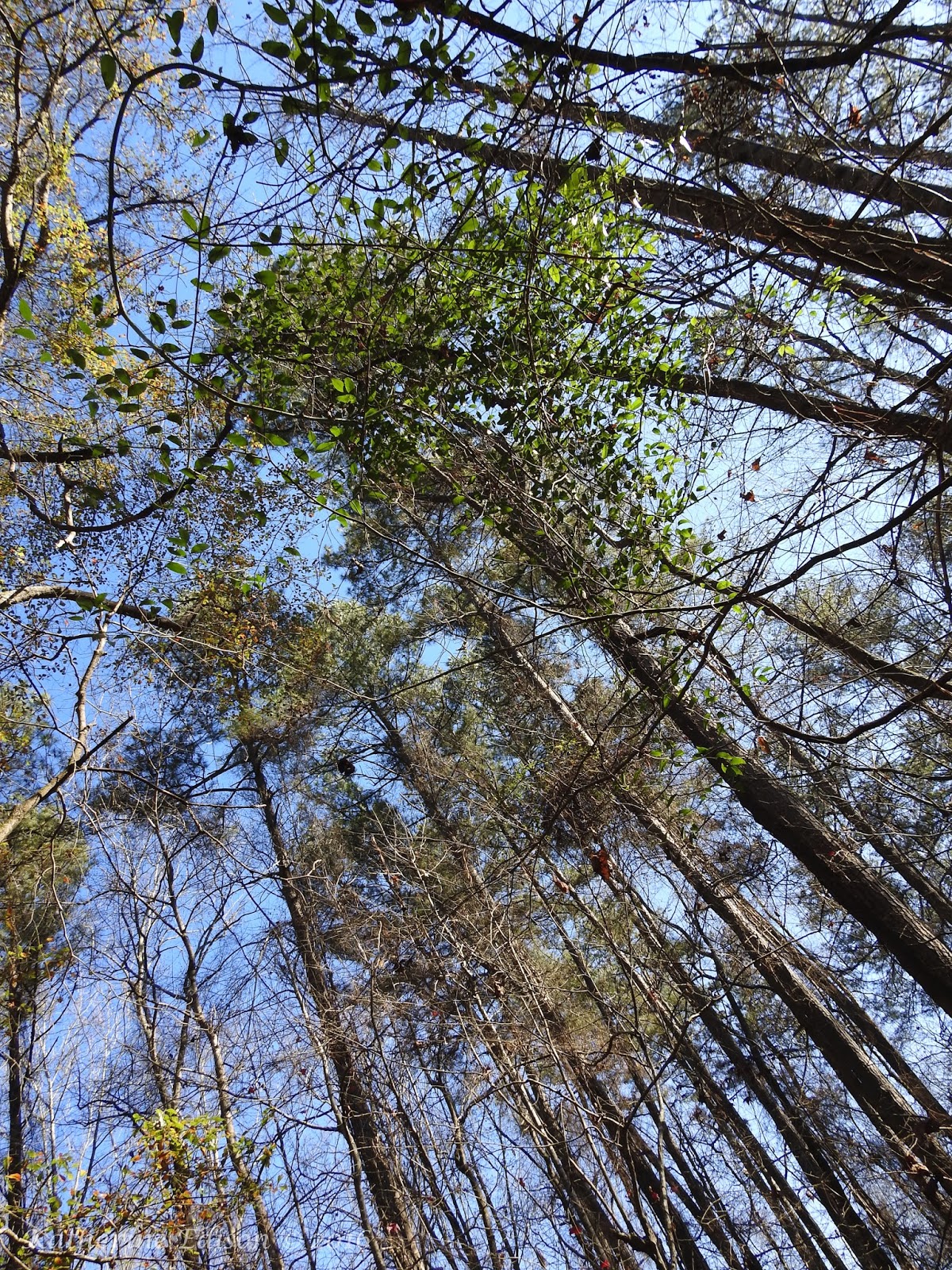
Tall Water Oak

A group of 1st graders and I were walking up the path back to the nature center yesterday. We had been on the trail for nearly an hour and they were happy but tired and hungry and ready to get back. We were almost there when we noticed something interesting on the trunk of a water oak tree just past the trailhead. There was some sort of circular blob on the trunk, and from a distance it appeared to be about the same color as the tree. As we got closer to examine we realized it was a cluster of caterpillars! Being first graders, many of them wanted to touch the wriggling shape. But I held them back and we watched for a couple of minutes, noticing the hairs that could irritate the skin and the pretty bright blue color that was not as noticeable from a distance. One of the kids said that it was the neatest thing she had seen on the walk. (Actually, she said it was the only neat thing she saw on the walk, but I didn't believe her!)

Nothing to see here?

The Cluster

After the children were reunited with their teachers and heading off to lunch, I walked back to the tree to have another look. I had never seen this behavior in caterpillars before. Up close, they were also incredibly beautiful. The blue color with white diamonds reminded me of fiber art and weaving patterns. I took a lot of photos.

Gorgeous colors and patterns

As always happens to me in situations like this, the more I looked, the more I saw. A pair of mating Milkweed Bugs crawled by just above my head. Right next to the caterpillar circle, a stream of ants was traveling up the tree from the ground, following cracks in the bark. A different kind of caterpillar moved down the trunk from above. This one was twice the size of the individuals in the caterpillar bunch, and had a very different pattern. The children and I had seen quite a few of these caterpillars in the park that day. When I got home I looked up both species in my "Caterpillars of Eastern North America" book and learned that the clustering caterpillars are Forest Tent Caterpillars, and are known for clustering like this. Despite their name, they do not make web tents. The other caterpillar was an Eastern Tent Caterpillar, and they are do make the web tents.

Milkweed Bugs

Ants

Two species of Tent Caterpillars on the same tree

There was so much going on right in front of me in this little area of the tree that I decided to investigate the rest of it and see if I could find anything else. But the tree was tall, so I could only look closely at my own eye level and below, which was only a tiny portion of the whole. It was a big and old tree, so there was a lot of moss and lichen on the bark in an assortment of colors and patterns. Some of the lichen looked to me like it had writing on it (I like to think they are hidden forest messages). A few feet away, a firefly climbed over lichen and moss, and seemed to be searching, though I don't know what for. Google tells me that adult fireflies eat pollen and nectar.

Lichen

Forest Messages

Firefly

As I made my way around the tree trunk I looked up and saw a row of holes, perhaps made by a sapsucker or some other woodpecker. Down below I saw the lumpy bark of the base of this mighty tree. Below that the frilly green of a tiny pine sprout peeked out from behind one of the big roots. In another root crotch I found a pink redbud blossom, probably one of the last left from this spring's blooms. On the other side, an Eastern Tent Caterpillar tiptoed by the star-shaped leaf of a sweet gum.

Holes

Craggy Base

Pine Sprout

Redbud Blossom

Sweetgum leaf with an Eastern Tent caterpillar photobomb in the upper corner


Just when I was starting to think I knew that trail pretty well, all it took was a closer look to see how much more there was to see and know. It reminded me of an activity we used to do when I worked at the nature center in Florida. We gave each of the kids wire coat hanger that had been pulled into a square shape and had them lay it on the ground. Then they were given a magnifying lens and a paper and pencil and were instructed to observe what happened in the square for a specified amount of time. At first some of the children balked. They said, "there's nothing here but dirt and some leaves".  But we told them to keep looking and to try to count everything they saw. Pretty soon even the most skeptical ones were hooked. An ant would walk through the square, or a grasshopper or a spider. They might see a seed, or a sprout, or a feather or a tiny flower. Then they used the hand lens and saw the shiny bits of sand and shell and rocks and broken insect wings. The more you look, the more you see.

Caterpillar Silk

I am also reminded of a book I recently read called "The Forest Unseen", by David Haskell. The author visited a square meter area in a forest weekly for a year and observed what happened in that space. He wrote about animals large and small, wildflowers, seasons and ecosystems. Its a lovely book that encouraged me to look closer, and made me think about what can be learned by observing one place again and again over time. As much as I like to travel and explore, there is a lot to be said for getting to know one place really, really well.

Tree Bark Wrinkle

So when was the last time you took a good close look at a tree? Looked deep down into a knothole or under bark, or felt a newly unfolded leaf? When was the last time you hugged a tree? Have you ever wrapped your arms around the trunk and felt the texture and sturdiness of a massive oak? Or buried your nose in a Ponderosa pine bark crevice and breathed the sweet vanilla scent? If it's been a while, I hope that you can take a few moments in honor of Earth Day and get to know a tree. There is a lot they can tell you if you just watch and listen.

Fresh Leaves

Saturday, December 17, 2016

Kindred Spirits

Cook's Trail

Earlier this fall I was the winning bidder for an item at a silent auction to raise funds for our local nature center (Sandy Creek Nature Center in Athens). The item? A guided day hike to the place of our choosing by one of Athens' most famous trail blazers, Walter Cook! I bid on the item because I thought hiking with an experienced person like Walt would be a great way for my husband and me, 2 relative newcomers to Georgia, to get acquainted with the local hiking scene. Walt and I tried originally to set up a day for a hike somewhere in the mountains while the fall leaves were still beautiful, and before hunting season started, but our busy travel schedule kept getting in the way. Finally he and I settled on a date in December. Walt had several ideas for local trails and made sure I knew that he also had a few favorite BBQ places in mind for lunch after the hike. I had no idea we were signing up for the full package! In the end, Walt decided on a trail and lunch combo that kept us closer to Athens so we wouldn't have to travel too far or watch for hunters. We would be hiking the north end of Cook's Trail and the Oxbow Loop in Sandy Creek Park, about 5 miles, followed not by BBQ, but by tasty Mexican lunch at a roadside eatery near the park. (It was delicious!) I was secretly thrilled because the trail we would hike was built by him and named for him and we were going to get to hike it with him! How cool is that??

Silent Woods
Chilly Morning

Walt shows Art where we'll be going

I had heard a lot about Walt over the year we've been in town, but somehow we never seemed to cross paths, even though we know a lot of the same people and hang around in some of the same nature circles. He is a retired Forestry Professor from UGA with a passion for beautiful forests, parks and trails. He has built countless trails all over Georgia and the Southeast. He was also one of the co-founders of Sandy Creek Nature Center in the 1970's where I am a happy volunteer trail guide, member and new board member. I have a deep respect for many people in the nation who had the vision to come together to purchase land and build nature centers during that time in our history. There was a real sense of connection with the land and new understanding of the importance of ecology and environmental education, combined with a strong community spirit and belief in the future generations. Much of the construction at Morningside Nature Center in Gainesville, Florida--another one of my favorite parks--was also done then.

Cook's Trial Marker and one of Walt's Benches

Because we didn't know each other yet, we agreed to meet at the gate of Sandy Creek Park. He said we should look for his little red car. When my husband and I pulled into the gate that cold morning and saw his little red car, covered with liberal and conservation bumper stickers just like our car, I knew we were going to get along fine. He led us through the park to the the trailhead and we made our introductions and headed off on our adventure. Walt seemed a little surprised that we didn't bring our kids with us. He had scoped out the trail the day before and as we later found out, had flagged a number of things he thought would be of particular interest to kids. I explained that our kids have grown and flown the coop, but that I loved fun nature discoveries and that he should still share them with me!

Trifoliate Orange with Long Thorns--Cool for Kids (And Us!)

A Rotted Tree Stump with Thick Walls 

Empty Cocoon

It was a quiet morning in the park and we only ran into 2-3 other people on the trail. It was peaceful and the light was beautiful. Did I mention that it was cold? Temperatures didn't get much over 40 that entire day and in the morning there was still frost covering the grass and leaves. Slow sections of the stream were frozen and clusters of frost flowers (not actual flowers, but ice extruded through the stems of hollow plants) dotted the banks. The birds were quiet most of the morning, getting louder as the sun warmed the woods.


Frosty Grass

Frozen Creek

Free Standing Frost Squiggle in the Path

Frost Flower with a Brave Spider

Delicate Frost

As we walked (rather briskly, I might add--I had to run to catch up whenever I stopped to take photos!) Walt talked about the history of the trail and the nature center. He told us about the people who had the brilliant idea to buy the property, and the determination that it took to raise funds and do the hard work. He told us about the aesthetics of managing forests and about carving trails with hand tools--shovels, saws and clippers. He showed us special trees and favorite views from the trail. He pointed out benches and bridges that he had designed and the ones he hadn't that didn't work as well. He told us about the people with whom he had walked and who had said, "we need a bench here".

Archway over the Trail

Cold Blue Heron on the Frozen Pond

Tall Trees

Aerial Roots from Muscadine Grape Vines

Some Kind of Seed Pod on a Vine--Milkweed Family?

We talked about our families and our histories, about the importance of parks and nature education, and about how difficult it is to protect them. He stopped a few times to measure trees and another time took us into the now dry flood plain to measure the height of the roots of the trees, showing signs of the drought. He knew exactly how long the stretch of Christmas Ferns was along the Oxbow loop because he had measured it. He knew this trail like an old friend.

Measuring Trees

The Water has Dried Up

Stand of Christmas Ferns that Stretches Across the Entire Hillside

When he saw something particularly pretty or interesting he would pull out his camera to photograph it. Of course, I had my camera working the whole time. We were both getting shots of one pretty and mossy log and he told us that his philosophy was that beauty can be found where you look for it, in the small things. I blurted out, "I feel exactly the same way!" and I knew we were going to be friends long after this walk.

Cluster of  Mushrooms

More Tiny Mushrooms on a Cold Morning

Lush and Gorgeous Mossy Log

Near the end of the hike he came to a place where he had stashed a beaver gnaw stick the day before, with the idea of giving it to our kids. I kept it for myself, instead, a special memento from a beautiful day.

Nearing the End of the Trail

My Gnaw Stick