 |
| Delicate Pink Worm Strings |
Feeding the Worms
by Danusha Laméris
Ever since I found that earth worms have taste buds
all over the delicate pink strings of their bodies,
I pause dropping apple peels into the compost bin, imagine
the dark, writhing ecstasy, the sweetness of apples
permeating their pores. I offer beets and parsley,
avocado, and melon, the feathery tops of carrots.
I'd always thought theirs a menial life, eyeless and hidden,
almost vulgar--though now, it seems, they bear a pleasure
so sublime, so decadent, I want to contribute however I can,
forgetting, a moment, my place on the menu.
I'll admit it right now. I'm a pretty lazy composter. We have a bin in the backyard, and have for years. But I don't do much to help it along. And I haven't pulled any finished compost out of the door at the bottom since I set it up in 2015. I don't crush my eggshells, and I never peel off the plastic tags from the produce. I have a special tool for stirring up and turning the compost, but I forget about it for months or years. We used to have 2 bins, before we moved, but only kept one to save space. And since I set it up, oh so many years ago, I have done precious little besides pouring in the kitchen scraps and tossing in the occasional armful of dry fall leaves when it gets too wet. I could feel guilty about my shortcomings, but I don't. It's compost. And lucky for me, the compost bin basically runs itself.
 |
| The Bin |
About 2 1/2 months ago, the compost bin was getting close to overflowing. We had some painters coming to work around the house and I was self-conscious about the strong smell of coffee grounds and orange peels that would waft off the top of the un-turnable pile for a few days after dumping, right next to their work area. I knew it was time to empty it out, and even move it to a new and better place. But I was not in the mood to do that. Besides everything else, a large contingent of winged ants had amassed on the outside of the bin, preparing for mating flights. They were there for days. This wasn't a good time to dig in. So I just stopped using the bin for a while. It felt strange putting all the kitchen trimmings in the trash, after making a habit of saving scraps for composting. Our trash bags were suddenly wet and smelly, and the outdoor garbage bin filled faster.
 |
| Inside the bin: Stickers, shells, avocado pits. Note large ant pile of humus on lower left. (I took out the stick--don't know what that was doing there) |
One day, about 6 weeks later (painting took a long time), I got curious and opened the lid of the bin. To my amazement, the pile had sunk a good 6 inches. It smelled gorgeous--fresh and earthy. A large colony of ants had settled in and had fluffed up a pile of the rich, dark humus--the result of the composted plant matter. It turns out that ants do a lot of work in a compost bin, turning over the detritus and bringing in fungus and bacteria that help break everything down. I read that turning the pile can deter them. Good thing I never maintain my compost bin! (Little joke.)
 |
| Tiny flies and spider webs |
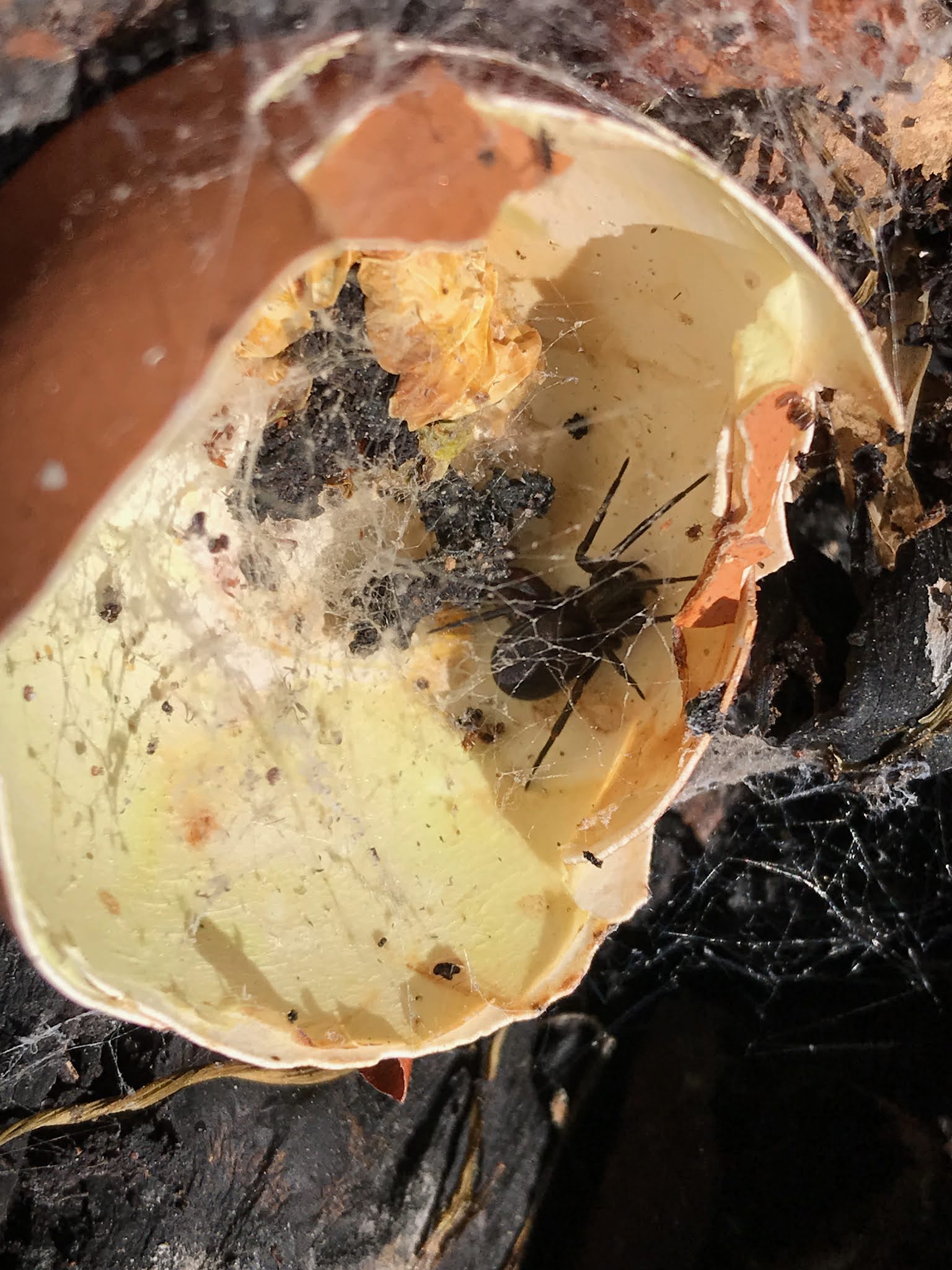 |
| Special Spider Habitat in an Eggshell |
 |
| Potato Bugs |
 |
| Roaches Dive for Cover |
 |
| Earwig Among the Ants (I don't know if this is a peaceful encounter) |
As I examined the shrunken heap, I was fascinated to see the many arthropod inhabitants. I saw tiny flies and flying insects on the walls, and figured that they must eventually end up as food for the dozens of spiders who had each inhabited her own eggshell. Potato bugs (or roly-polys or pill bugs) scurried out of sight when I lifted the lid, as did the numerous, large cockroaches and earwigs--the detritus eating A-Team! Sometimes when I opened the lid, a lucky fly would land on the decaying produce (or maybe they were unlucky if they got shut in and eaten by the spiders).
 |
| Free Range Spider |
 |
| Fly on the Ant Mound |
 |
| False Blister Beetle Seems Out of Place Here--Usually Found on Flowers |
 |
| Egg Casings--not sure species |
 |
| Green Bottle Fly |
Checking on the goings on in the compost bin has become my latest hobby. I find something new every time I look. I enjoy quickly lifting the lid to see if anything surprising is happening in the darkness. The sunlight and my movement causes quick dives for cover. Many of my photos of the scurriers are blurry or partial because of that mad dash for shelter! This week when I looked, I noticed a new, larger species of ant patrolling the rim of the bin. I don't know my ants well, so I can't be sure they were not just the soldiers of the ones I'd seen before, but it would not surprise me to know that there were several species living inside. I also found large clusters of ants tending eggs. Some had even taken over the egg shells that had previously been occupied by spiders.
 |
| Ants, Eggs and Larvae in an Onion |
 |
| Ants Have Evicted the Spider |
I guess the point of this all is that there is wonder to be found everywhere, if you just look. Even in the compost. After seeing the multiverse that exists in my compost pile, I feel a bit hesitant to move it or stir it up, because it's so marvelous. But I also know that my garden can always use some nice rich soil, and I'm tired of throwing away all those valuable veggie scraps. And the worms and ants and spiders and roaches will all get back to work again about as fast as I can set up the bin in the new location. They're self starters.
 |
| Fresh, Sweet Humus, with some Cantaloupe Seeds Tossed in for Fun |


