Showing posts with label Lake. Show all posts

Thursday, January 18, 2024

Journey in Place: Frame of Reference

Map at the Park Entrance

As I sit at my desk writing I am a bit distracted by the large flocks of Cedar Waxwings and American Robins that have descended on my yard this cold January morning. They are dropping from their sunny perches in the trees down to our small pond that has abundant flowing water, a scarcity today when the temperatures are barely warming up from the teens of last night. They are also feeding ravenously on the berries of the Chinese Holly and Japanese Privet that line my yard. Like them or not, the large and established (albeit exotic) bushes do provide food and shelter for hungry birds.

In our 2nd Journey In Place exercise, Janisse asked us to put our Place in spatial perspective, identifying the location, bioregion and boundaries, and then decide to whom the study should be dedicated. Then came the toughest part, for me at least--we were asked to sketch a map of our Place. After walking the trails and doing some research, I came up what I think represents the way I view my Place. I wish I had the patience to carefully sketch and print beautiful letters, but that just doesn't seem to be me. I get impatient. Here is my map:

My Map

So, about my place. My place is the Oconee Forest Park, a natural area on the University of Georgia Campus. It is located within the bioregion of the Southern Outer Piedmont of Northeast Georgia and is in the Upper Oconee River Watershed. The park consists of 60 acres of hundred-year-old trees on rolling hills that edge a 15-acre manmade lake. It is bordered by an unused railroad track, tennis courts and band practice fields on the west side, a highway ("The Loop) on the south and east, and College Station Road and the Intramural Fields to the North. It contains two manmade lakes, one large one (Lake Herrick) and a much smaller one (Little Lake Herrick). Lake Herrick is fed by a small stream that catches runoff from the 5 Points neighborhood on the north side, where I live. Water from Little Lake Herrick up above, supplies water to Herrick Creek that runs through a ravine and down into the larger lake below, where Herrick Creek picks up again and flows into the North Oconee River to the northeast. 

Boardwalk on hill leads to Bridge across the lake

Big, beautiful oak on the Lake Trail, by exercise equipment

Intramural Field on a frosty morning

One of the platforms the looks over the lake

Mountain Bike Trail and Power Line Cut

Herrick Creek

Hiking and mountain bike trails wind around the lakes, and through and around the forest. Service roads serve as wider trails and allow access for maintenance equipment. Facilities on site include fishing docks, a boat ramp, picnic areas, and a ropes course. A wooden boardwalk next to ball courts leads to a bridge across a narrow arm of the lake. The area serves as an outdoor classroom for forestry, biology and ecology students, and is popular with runners, walkers, bikers, dog walkers, photographers, artists, and nature lovers, both students and the general community. Oconee forest Park is an ebird hotspot. 

Kingfisher on one of the platforms in the lake

Killdeer Chick in an Intramural Field

Stinkhorn Fungi

Fox

Heron in the Lake on a Misty Morning

Snake Tree

Tree Frogs by Little Lake Herrick

Bloodroot Patch

While preparing to draw my map I looked at existing maps of the area online and discovered that some of the unmarked trails actually have names! I learned that my "comfort spot" is located on "Tranquility trail", which makes perfect sense because it exudes peace and calm. "Tranquility Trail" follows the contour of the hillside and over a ridge to the "Birdsong Loop", another favorite and aptly named trail. On a map, I think the Oconee Forest Park looks kind of like a heart. I like the image of it providing lifeblood to the community through physical and mental health, protected habitat, and its place in the watershed, channeling water to the Upper Oconee River. I picked it as my Place because of its proximity to home, and because it was a lifesaver for me during the Covid pandemic when everything else was closed and I needed a place to breathe and think. It has provide me with endless hours of peaceful contemplation birdsong, and discovery. I would like to dedicate my Journey In Place to the people who had the foresight to create this oasis (one of whom was my friend, Walt Cook--more on him and his role another time), the people who are working currently to maintain and improve it, and to my fellow travelers who share it with me.


Saturday, February 11, 2017

We All Need a Little Green

Path Through the Woods

In my mind, one of the most important gauges of the livability of a community is whether or not there are greenspaces within easy walking or biking distance. Greenspaces are open patches of undeveloped land within an urban area, with trees and/or grass and minimal structures, and are generally open to the public. Parks, playgrounds, botanical gardens and nature parks come to mind. It takes some vision to create and maintain greenspaces. They are often on land that could be developed into something that could make lots of money, like a subdivision or an apartment building or a strip mall or a parking garage. Imagine how valuable the land in Central Park could be, located right in the middle of Manhattan. But, luckily, there are people out there who have understood the importance of having communal space available for connecting with nature. They understand the need for people to breathe fresh air, to walk in the beauty of trees, flowers and bugs, the need for children to run and play outside, for people to exercise and walk their dogs, to ride bikes, to watch birds, and to take nature photographs. Countless studies tell us that being in nature is good for us. Spending time in nature calms our jangled nerves, lets us keep healthy through exercise, and even helps our children concentrate better in the classroom. Imagine New York City without all its city parks, small and large, where people can go to escape from small apartments and crowded streets and subways. Without them people would go nuts. It's the same in every city. In addition to everything else, trees and plants in greenspaces clean our air, and the natural areas themselves provide critical habitat for urban wildlife. It is really important to me that nature is accessible to other people in my community, too. And this is one reason that I am involved on the board of Sandy Creek Nature Center where I also volunteer as a trail guide.

Cedar Waxwing 

But this is not about Sandy Creek. I consider myself very lucky to live in a lovely, livable community with greenspaces all around. I live a short walk from another pretty great greenspace--Oconee Forest Park and Lake Herrick on the UGA campus. Oconee Forest Park is a 60 acre wooded area that is managed by the school of forestry. It serves as a teaching area for foresters, biologists, ecologists and other natural scientists, but is also open to the public as a recreation area with trails for walkers, bikers, dog owners and nature lovers. Located next to Lake Herrick, there are benches, picnic tables, docks, outdoor exercise equipment and even a ropes course for teambuilding, as well as a beautiful ADA compliant boardwalk. It's a great place to be in and observe nature. I have seen deer, squirrels, snakes, turtles and beaver. And it is full of birds! The forest and lake area are birding hotspots. On a recent walk I counted 26 species without trying very hard. A sunny, cleared utility easement under the power lines is a superb place to find butterflies and other insects in the summer and fall. There are even labels on some of the trees to help people like me learn about Piedmont dendrology. All in all it's a pretty great place.

Turtles

Crow

Power Easement

Lake Herrick at the Bottom of the Hill

Lots of Recreation and Healthy Activities

Helping Me to Learn My Trees!

ADA Boardwalk Bridge Across the Lake

Forestry Students

Unfortunately, the park and lake suffer somewhat from misuse and neglect. There is a lot of litter from careless hikers or just blown in from the road. And like many other natural areas around town, sections of the woods are overgrown with exotic plants like English Ivy and Privet. The lake itself has been closed for swimming and boating since 2004 because of poor water quality due to factors such as storm runoff and bacteria from dog feces. The park is a very popular place to walk dogs, but it has been difficult to convince owners to clean up after their pets. (I think it would help to have more garbage cans and poop bag dispensers, but that may already be in the works.) Another problem is erosion caused by unofficial bike and running paths. Renegade paths may give a fun and fast ride down a steep hill, but it also gives a quick channel for storm runoff. Properly designed paths minimize erosion. But the University is acting to address the problems, with mitigation projects starting as soon as this spring, which is great news. It will be nice when the lake can be used for recreation again. I read that a small lake on the far side of the property that has become filled with silt from runoff may be developed as an improved wetland and I find this very exciting. I've had great experiences viewing nature in manmade wetlands around the country and have become a big fan.

Small Lake that Could Be Turned into a Wetland

Creek Runs Through the Forest to the Lake

Entrance to the Forest

Our family gets a lot of pleasure from using this resource. My husband likes to run through Oconee Forest Park, and we sometimes bring our dogs there. I love living close enough to just walk over to the park when I feel like birdwatching or taking photos. Some times, like weekends and evenings, the place is packed. But during the day it can be fairly quiet. I can easily spend hours there, wandering the meandering trails. Every visit I notice something new. This past time I found a big beaver lodge. Last visit, I heard and saw an unseasonably early White Eyed Vireo. Most times I see interesting fungi, plants or wildflowers. One day I hope I can roll a log or lift a rock and find a salamander. (I still haven't found one in the wild yet.) And as I get to know the park better, I get lost a lot less often. Or maybe I worry less about it. Being on campus, it is fairly well used and safe. And since it is in northern Georgia, I don't have to be afraid of being trapped on a trail by an alligator or a cottonmouth, as happened to me sometimes in Florida.

Beaver Lodge in the Water (Middle Right)

Eastern Phoebe

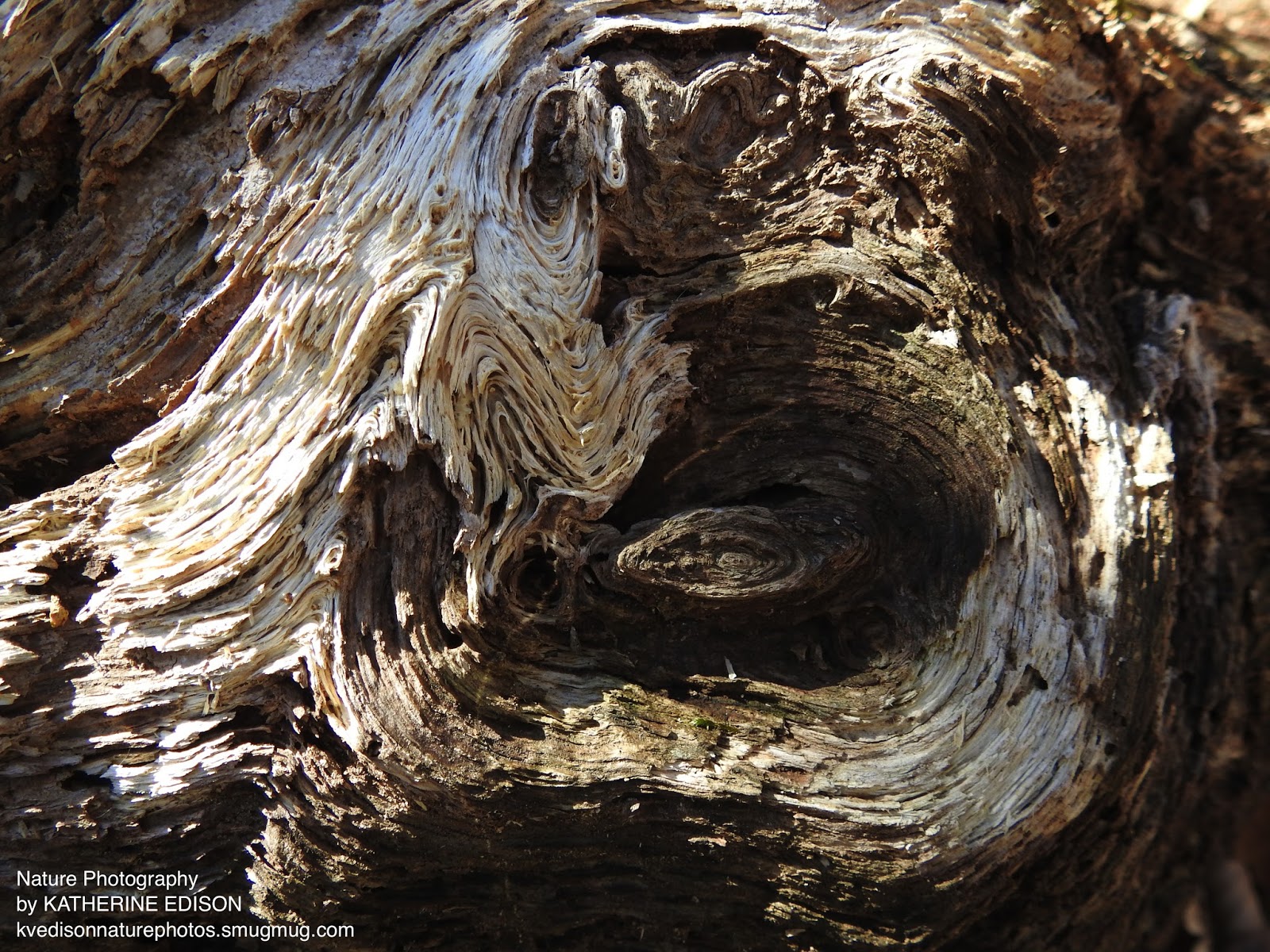
Texture on a Rotting Log

This unusual Deer Sculpture is the only deer I have actually seen here in the park, although I have seen tracks.

I guess the point here is to encourage everyone to seek out your own local greenspaces. Spend time outdoors and commune with the trees and the rocks and the bugs. Even in winter, go enjoy the snow and the muffled silences. Even in the sweltering heat of summer, go listen to the cicadas while you lie on the grass, watching the clouds roll by. Get out often enough to see the changing seasons. Learn those places as well as you know the plots of your favorite TV shows and you will not have wasted your time. Share them with children. We all need a little green.

Great Blue Heron Enjoys the Small Pond


Monday, June 15, 2015

30 Days in June: Day 14, Paynes Prairie Preserve State Park

Under the Oaks
I had a lot of great locations to pick from this weekend for my farewell tour, but it seemed like a trip to the main entrance of Paynes Prairie was long overdue. I live close to La Chua Trail, on the NE end of the park, so that is my "go to" trail. But there are upland trails, Lake Wauberg, and the visitor's center on the other side and I always enjoy myself when I can get past the half hour trip vs 10 minutes to La Chua, so it was time to make this happen.

Swamp Trail
I got to the park soon after the gates opened. Even though it was supposed to be clear, sunny and very hot, I drove through thick fog as I crossed the Prairie to the entrance. The fog burnt off quickly, though, and it was plenty sunny and hot by the time I walked along the short trail through the dark swamp and arrived at the fishing bridge on Lake Wauberg. I always hope to see an otter there, but it never happens. This morning there were very few birds on the lake, just a couple of Anhingas and a Great Blue Heron. And the sun was right in my face as I looked back into the woods to try to see if there were any small birds in the trees. But luck was on my side and I was rewarded with good look at a Yellow Billed Cuckoo. Another for the list!

Lake Wauberg from the Fishing Bridge
I heard Northern Parulas, Cardinals and Red Bellied Woodpeckers in the trees, but didn't see much more. I didn't even see Green Treefrogs, which is unusual, but there were Bullfrogs a-plenty, Dragonflies and many, many Argiope Garden Spiders sitting in their giant orbed webs behind a filament screen.

Big Argiope Spider with a Katydid
I trotted on down the road before it got much hotter. The temperature was supposed to be in the 90's but feel like 100. The Lake Trail takes you over the fishing bridge and through some huge old live oaks before it enters a sunny, sandy field--often a good place to find Gopher Tortoises. Walking past those magnificent trees, I had a sense that I was in the presence of a Council of Elders. They are ancient oaks. If trees could talk, they could tell such tales.

Council of Elders
Just as I was exiting the oak grove, I saw a young White Tailed Deer. We looked at each other for a few minutes before it leapt into the bushes. I walked the short trail through the sweet meadow and did not see any Gopher Tortoises, though I did see several burrows. I passed tracks in the sand showing me what I had missed all the other times I hadn't been on that path--Armadillos, hopping birds and Coyotes. I saw Tufted Titmouse, Blue Gray Gnatcatcher, White Eyed Vireo and Summer Tanager. Vultures wafted overhead. It was getting hot and I needed to hurry if I wanted time to go to another trail. On the way back to the parking lot I surprised a fawn hiding behind a Palmetto. It shook its leg, trying to decide if I was dangerous and whether or not it should run. I guess I didn't look scary and it stayed put, munching and watching.

Deer Encounter

Armadillo Tracks

Hopping Birds

Sweet Meadow Trail

Summer Tanager

Floating Vulture

White Tailed Fawn
The other trail I wanted to see was Cone's Dike Trail. It was far too long, and far too hot for me to walk the entire trail, but I wanted to get out and see at least some of it. I have not spent much time on that trail, but the few times I did were memorable. Access to the trail is through a wooded area near the visitor's center. There is an Eagle's Nest near the trail, but I couldn't see if the Eagles were still there. It is also possible to see Great Horned Owls perched on the giant oak limbs near the visitor's center, but I didn't see them either. It was pretty late in the morning at that point.

Two Good Trails

Down Through the Woods and onto the Prairie

I walked until I got far too hot, about 30 minutes, and decided I had to go back. But the trail was nice. I saw butterflies, Eastern Towhees, Snowy Egrets, Blue Grosbeaks, Great Crested Flycatchers, heard White Eyed Vireos everywhere, and caught a Wood Stork flying over. I also found a mother Alligator and 7 of her babies. A good place to turn around. I hope to get back again.

June Challenge Count: 84, and 18 Natural Areas visited.

Wood Stork

Gator Family Swim