Showing posts with label Argentina. Show all posts

Tuesday, November 5, 2013

We're All in This Together!

I meet the nicest people when I'm out and about. My nature activities give me the opportunity to interact with the public, both as a participant in a group and also as a leader. Sometimes I get to pass on my collected wisdom, such as when I lead wildflower walks or make classroom presentations, or in this blog. And sometimes I'm on the receiving end. And in many situations it goes both ways. I might have something important to add when I'm participating in a group, or someone in a group I'm leading might give me new or corrected information. In general, I've found that nature lovers are a friendly lot, eager to learn and to share what they know. Sometimes someone notices an error, and for the most part, I've found that people will mention the correction in a gentle, non-agressive way, in order to protect the dignity and the enthusiasm of the person who was in error. It happens to me all the time. I have said over and over that I am not an expert, but I am a nature lover with a growing base of knowledge. I post a lot of photos, either in this blog or on my photo website or Facebook. Sometimes I will misidentify an animal or plant and I have a group of friends who will let me know that I was mistaken. But they will usually take the time to tell me what key points to look for in making the correct ID. They are teaching me, and they're doing it in a way that does not make me feel foolish or inadequate and leaves me with the confidence to go out and try again. I love that about my friends and acquaintances in the nature community.
After I posted this photo on a previous blog, I learned that this is not a Stinkpot Turtle. It is a Striped Mud Turtle. Now I know!
Last year, you may remember, I traveled to Argentina. When we got home I did my best to identify what I saw on that trip, and I entered all of the birds I had photos of on eBird. A few months later I was very surprised to get an email from an eBird representative in Argentina asking for specifics about a Tiger Heron that I'd listed in Iguazu falls. I got nervous and looked over my photo and compared it to the information I could see online and thought I could still be correct, but I sent them my photo anyway. The ebird person wrote right back and thanked me for my photo and said that it was a difficult call, since it was an immature bird, but that she would have the experts look at it and see. The next day, the experts all agreed that I was incorrect. It was a Tiger Heron, but not the species that I had thought. That was ok! I enjoyed the exchange and learned along the way. The person who contacted me made me feel like I was contributing to the science, and could understand how I might make the mistake I did. And my posted photo will now help add to the collective wisdom.
A Rufescent Tiger Heron in Iguazu Falls, Argentina. Not to be confused with the Fasciated Tiger Heron. 
I love the way that nature lovers are so eager to share their new discoveries with each other. Social media has made this very easy, and it is one of the few good reasons that I stay on Facebook. Alachua County Birding recently started a Facebook page that has been bustling with activity as the fall migrants move in and out. Local birders post the location of special and rare birds for everyone to come enjoy. In Gainesville, we also have Rex Rowan's email newsletter that tells us all that and more, with links to photos on a shared Flickr page as well! Wildflower lovers can share photos of "What's In Bloom" from all over the state on the Florida Wildflower Foundation website. I can follow the progress of the Whooping Cranes and the Monarch Butterflies on migration blogs and I get tips about creating good habitat for Native Bees on the Native Bee Nest Site Project Facebook page. Everyone is sharing!
White Topped Aster (Sericocarpus tortifolius) photo that I shared on the Florida Wildflower website. I was contacted by the Broward County chapter of the Florida Native Plant Society for permission to use it in an educational presentation.
I have learned so much by taking informal classes and going on field trips led by knowledgable people. Not all of the people are professional experts or academics, although many are. There are many serious amateur naturalists who are experts in their particular areas and are more than willing to pass along what they know. Birders, botanists, entomologists and naturalists of all types are out there and they have a passion that they love to share. It is a joyful thing indeed to learn from someone who loves something so much. In fact, I have found my own niche by exploring my passion. I love taking photos sharing them with my friends and family. Over the years this has turned into a website and blog, and as a result I've had requests for permission to use some of my photos for articles, websites, advertisements and even seed packages!  It feels good to be contributing to the love and appreciation of nature.
A Tiger Swallowtail Butterfly photo that the City used for an advertisement spotlighting Gainesville's Natural Beauty!
Yes, there are some people who want to keep the good stuff to themselves. There are people who don't have patience for novices. But they are rare (and lonely!). Most people like to share.  Most of us don't have the tools to learn these things on our own. You need the insider scoop to really understand. It really helps to have people there to guide you along the way, to point out the good spots and field marks, and it's also nice to be able to guide someone else! It's a lot more fun being in a community. There are lots of books and classes and resources and the people "in the know" will let you know which ones are best. Basically, we're all in this together, and working together is a great thing. You can see it in the smiling faces of the people who participate in these groups, loaded down with field guides, binoculars and cameras, chattering with the excitement of discovery and sharing.
Happy Birders

Thursday, February 7, 2013

El Fin del Mundo--Ushuaia, Tierra del Fuego, Argentina


Welcome to Ushuaia
It's fitting that the last leg of our journey through Argentina took us to "Fin del Mundo", or the End of the World. We landed at the airport in the city of Ushuaia, which is often called the southernmost city in the world, located on the Beagle Channel in Tierra del Fuego province in Argentina. Our taxi brought us to our hotel (Las Yamanas), beautifully situated right on the Beagle Channel, about 5 km. from the center of Ushuaia.
Beagle Channel, Right outside our Hotel
The hotel had an odd but interesting diorama in front dedicated to the history of their namesake people, the Yamanas who lived in the region at the time of first European contact, up until recent times. Ushuaia is supposedly a Yamana place name, but I'm not sure if anyone knows what "Ushuaia" means,  because, although there is a dictionary of many words from the Yamana language, it is incomplete and the people themselves have mostly died out. We were told there is only one elderly full blooded Yamana remaining and she lives in Chile. They lived and thrived in this region for thousands of years, despite the cold temperature which remains between 0-9 degrees celsius (32-48 fahrenheit) year round. They were small people, and spent much of the time kneeling in their canoes or in a squatting position, which helped conserve heat. They ate a huge number of calories each day and reportedly had a slightly higher body temperature than our normal. They wore no clothing and stayed warm by covering themselves with animal fat which kept them from losing heat and moisture even though they spent most of their time on the water, either in canoes or swimming and diving for shellfish. During storms they took shelter in the rock alcoves on the shore and small islands.  They were also known for the huge warming fires they built on the beaches. Ferdinand Magellan noted these fires and named the region "Tierra del Fuego" or "Land of Fire" after them.

Las Yamanas Display at our Hotel
The motto of the city is "Ushuaia, fin del mundo, principio de todo" or "Ushuaia, end of the world, beginning of everything", which is apt because we fit as many adventures as we could into 3 days. As I mentioned, our hotel was located right on the Beagle Channel. The first morning I walked out to the edge of the water that we could see from our bedroom. There were seabirds of all sorts within yards of the hotel. Oystercatchers, Gulls, Sandpipers, Cormorants, Ducks, Geese, and something huge which turned out to be a Petrel.
Magellanic Oystercatcher

White-rumped Sandpipers

Southern-Gigant Petrel
I could have spent a week just photographing there. But instead, we booked 2 excursions. The first was a trip to the Pinguinera. We took a van ride out of Ushuaia, through forests and peat bogs, to the large privately owned Estancia Haverton that includes the Penguin Rookery. We went by Zodiac (another first for me) and within 5 minutes we were at the island. There were penguins everywhere! Our guide explained that Penguins had moved to this island about 20 years ago to get away from seals, who eat penguins. They have been safe for all this time, but this year some seals were sighted nearby. Time for penguins to watch out! There were 2 kinds of penguins breeding on the island--Magellanic and Gentoo penguins. The Magellanic penguins dig holes and nest in their burrows. The Gentoo penguins build up nests made of rocks. Both kinds of penguins had chicks and some had just hatched that day. There was also a lone King penguin who was hanging out with the Gentoos. He/she was the only one of their kind, so there would be no chicks this year. No one knew why it was there, but it was a treat to see anyway. In addition to the penguins, there were cormorants, geese and skua gulls. We found a pair of skuas who had just hatched some chicks. They were adorable. Skuas eat penguins and their chicks, so I'm trying to hold onto the adorable picture in my mind, knowing that it will probably get ugly sometime soon. But skuas have to eat, don't they? We spent an hour on the island and it went all too quickly. The company that does the tours limits the number of people on the island every day and they keep people from walking near or touching the birds. It was magical to see them. Penguins are very loud and squawk a lot and are funny to watch when they walk. Also, something I never realized about them is that they fart when they stretch. It was so funny! I loved being there so much and wish I could have spent more time there. It made me want to be a tour guide in Patagonia.

The Pinguinera

Magellanic Penguin and Chick in Burrow


Gentoo Penguins and Chick in Rock Nests

Lone King Penguin

Skua and Chick
The next day we took a sailboat tour to an island preserve ("Isla H") in the Beagle Channel. We hiked around on the island and learned a little about the flora and about the Yamana people who sometimes sought refuge there. We also saw Skuas, Flightless Steamer Ducks and nesting Rock Cormorants. The cormorants built their nests out of mud, plants and guano. Some of the nests were hundreds of years old. Most of the cormorants had chicks, which was very exciting to see. Then we got back on the sailboat and sailed to an island with Sea Lions and King Cormorants. The Sea Lions were huge and very sleepy, so they weren't doing much. The Cormorants had the prettiest blue eyes. There were some Snowy Sheathbills hanging out with the Sea Lions and one of our fellow passengers told us that they eat poo. Nature's little cleaner uppers. A lot of the tourists in Ushuaia were going to or returning from cruises to Antarctica. It was pretty cool to be in a place that was a launching spot for the South Pole. It sounds like a trip worth taking some day, although one couple we talked to said they were very happy to see anything green after a week of ice and ocean. When our sailboat was leaving port, someone said that there was a whale sighting. I didn't see anything, but the South Pole travelers saw lots of whales and every type of penguin. Sigh.

Flightless Steamer Ducks and Chicks

Skua 
Rock Cormorants and Chicks in Nests

Rock Cormorant

Sea Lions and King Cormorants

King Cormorants

Snowy Sheathbills
On our last day, we rented a car and drove to the Tierra del Fuego National Park. It actually took us a few tries to get on the right road. We followed signs that said "National Park" and ended up several times on dead end dirt roads. But we finally got set right and drove there. It's very close to town and we passed a lot of taxis driving people up and dropping them off to hike for the day. We found a nice trail to walk and spent a couple of hours walking along the shore of Lago Roca, back amid the tall Beech trees with their strange galls everywhere. It was really lovely and I kept my eyes open for the elusive Megallanic Woodpecker, but alas, did not see one. I did see orchids, however. They were everywhere and it was beautiful! The trail ended at Chile. There was a sign that announced that it was an international border that should not be crossed. I am a rule follower, so I didn't cross, but someone in our group (I'm not naming names) insisted on eating a banana in Chile. After the hike we drove to another short trail near the Beagle Channel. We saw a red fox in the parking lot. It was a little too used to people and came very close. I got my best photos from inside the car. We also took a short hike to see the Beaver Dams and try to see a beaver. We didn't see any. They are not native to Tierra del Fuego. They were brought down from Canada, along with muskrats, in the 1940's to start up a fur industry. The fur industry didn't take off for whatever reason, but the beavers settled in and started damming up rivers. Now they are gnawing and drowning trees and causing all sorts of damage. I think beavers are cool, but only where they belong. This is just another reminder that organisms outside of their natural ecosystems will have an effect, usually not a good one. It's all connected. Beavers have not been good to Patagonia. There is a trapping program in place in the National Park. Meanwhile, though, there are actually tours in Ushuaia to go see the beavers (Los Castores). I guess when life gives you lemons, you make money with beaver tours.

Beech Galls in the Forest

Palomita Orchid

Yellow Orchid

Palomita Orchids

Tierra del Fuego National Park

Bold Red Fox

Beaver Damage
So we said goodbye to Ushuaia and Patagonia and headed back to Buenos Aires for one more day, and then back to Florida. It was an amazing trip and I am so lucky to have had the opportunity to see these wonderful places. It sounds like we'll have a chance to go back to South America again in the next couple of years, and I can't wait!

Beagle Channel

Click here to see more of my photos from Tierra del Fuego. 


Wednesday, January 23, 2013

Laguna Nimez Nature Reserve, El Calafate, Argentina

Laguna Nimez Nature Reserve, El Calafate
There's nothing quite as frustrating to a photographer as being unable to take photos when the opportunity arises. That's how I felt on our first day when we walked through the bird refuge in El Calafate. I saw new and fabulous birds at every turn in that park, but, as you may recall from a previous post, the wind was so strong that I could barely hold my small point and shoot camera up to my eyes to take the photos, let alone bring out the big telephoto lens. So I hoped and hoped that we would be able to fit in another visit under better circumstances. We lucked out on our last day in El Calafate. The weather was sunny and clear with little wind and we had a few hours before our flight, so we spent a nice couple of hours walking the refuge and making amends for the first day. I was in heaven! The refuge is a real gem. It is located on the edge of Lago Argentino, just a few blocks from downtown in El Calafate. It was very inexpensive ($10 pesos, or about $2 dollars), and yet provided some of the better opportunities to view wildlife that we saw on this leg of the trip. There are well marked trails with excellent signs identifying birds and plants, several bird blinds at the edges of the lagoon, and enthusiastic and knowledgeable staff. They even loan binoculars!
Bird ID's

Plant ID's
The trails take you through marshland, lagoon, dune, lake, and dry grassy steppe habitat. We used their  informative brochure (in English!) for the self-guided tour. We saw ducks, geese, raptors and small songbirds, as well as flamingoes, swans, gulls and ibises. I could have spent all day there, but we had to leave for our next adventure. However, we packed a lot of bird watching into those few hours! Here's just a sampling of what we saw.

Chilean Flamingos against the Mountains

Southern Lapwing

Crested Duck

Black Faced Ibis

Long-tailed Meadowlark

Rufous-backed Negrito

Red-gartered Coot and Chicks

Andean Ruddy Duck

Cinereous Harrier

Chimango Caracara

Upland Goose Family

Spectacled Tyrant

Patagonian Mockingbird

Correndera Pipit


Did I Mention Chilean Flamingos? 
For more views of birds from this preserve, as well as other birds of Argentina, use this link to my Smugmug photo website.

Monday, January 21, 2013

Parque los Glaciares, El Calafate, Argentina

It was with great anticipation that we boarded our plane heading south from Bariloche to El Calafate. Bariloche had been a wonderful surprise, with the meadows of lupines, majestic mountains and clear blue lakes. El Calafate was bound to be even better. We'd seen photos of the glaciers, but it was hard to put them into any context. We knew they would be wonderful, but we were not prepared for how truly magnificent they would be. As our plane descended to the airport, my husband and I both craned to see any sign of glaciers from the windows.
The View of El Calafate From the Airport

The Area Around El Calafate is Dry and Flat. Lago Argentino in the Background

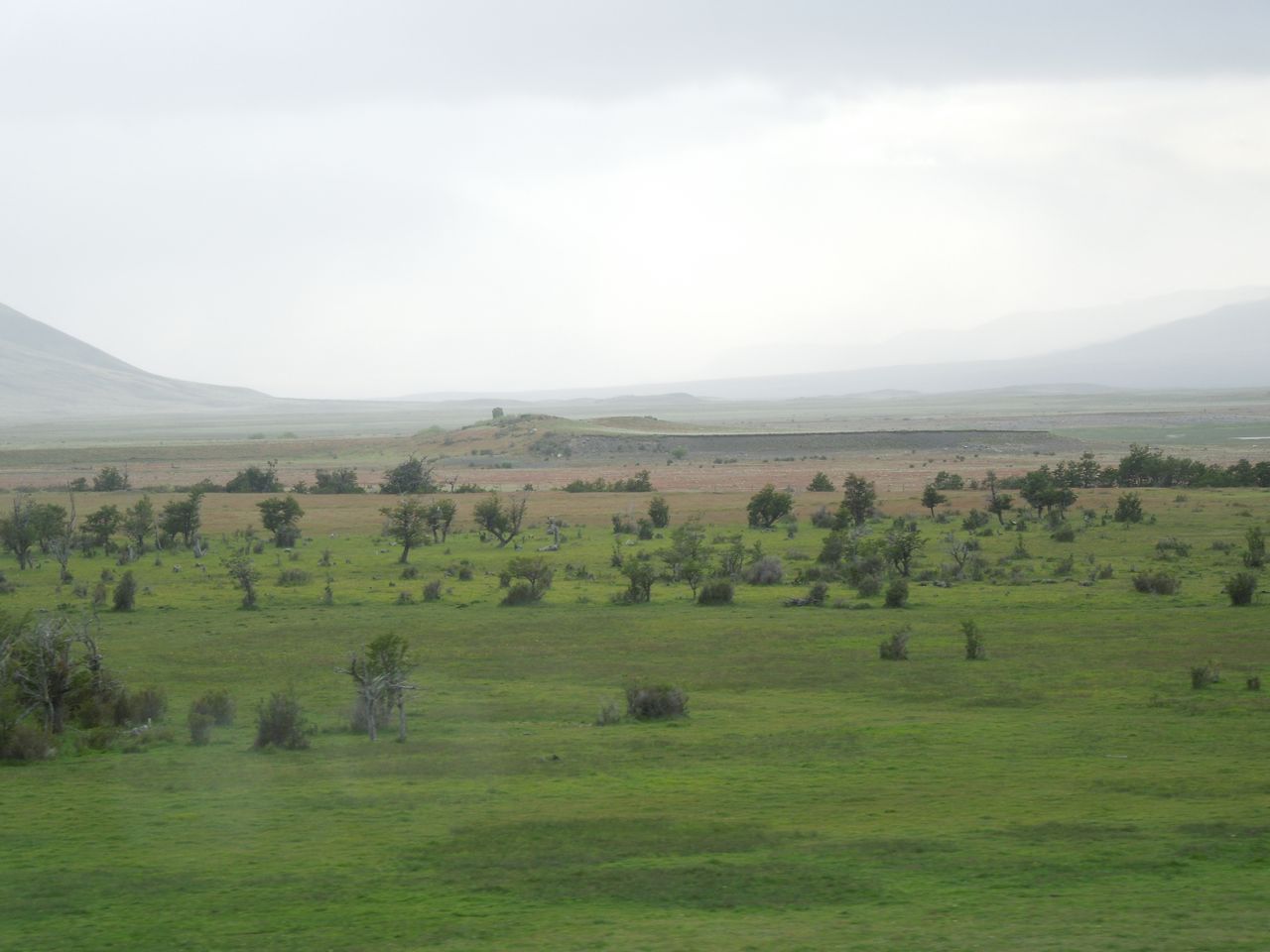
What we saw below was flat, stark landscape dotted with bodies of turquoise water and patches of white that we figured were probably glaciers. We had no idea. The area reminded us vaguely of West Texas with the sparse vegetation  and vast horizons. It was extremely windy and we had a rough landing--so windy that when we later stepped out of the cab at our hotel, it was hard to walk forward or stand straight. Later in the afternoon we explored a bird refuge and the wind blew so hard that it was difficult to hold a point and shoot camera to take photos of the amazing birds there. Wind kept birds from being able to land on their nests and whipped up whitecaps on the pond. We enjoyed our walk in the brisk wind and decided to return on another, less windy day to get photos.
Chilean Flamingos and Whitecaps

Really Strong Wind!
The city of El Calafate is a bustling base camp and tourist town for the trekkers who are setting out for El Chalten (Mt. Fitzroy), and for the many tourists who have come to see the wonders of the glaciers. It's located on the shores of Lago Argentino, a huge, turquoise colored lake with with the occasional iceberg, either white or blue, depending on your angle. The turquoise color comes from the light colored rock that is scraped away by the glaciers and ends up as particulates in the lake.
Lago Argentino. Yes, those are Icebergs!
The climate in El Calafate is very dry and arid steppe and the vegetation is small and sparse as you get further east from the Andes.
The Steppe
Closer to the mountains, you'll find woods, dominated by trees such as the beech. The elusive Magellanic Woodpecker is supposed to live in these woods, but once again, we missed seeing one. El Calafate is a fairly small city, but per capita they have more outdoors equipment stores than I have ever seen in one place. It is quite far south and the sun rises at about 4am and it gets dark at about 10:00pm. The hotel rooms have thick, dark curtains so that you can get any sleep at all. The city is about 45 minutes away from the national park where the glaciers are located, on the other side of the lake. Most people take guided tours of one type or another because you are not allowed to walk on the glacier without a guide. Also, you can only see one of the glaciers from the main park trails. If you want to see others, you need to take a boat ride.
Mountain Forest
Our first trip to the Parque Nacional los Glaciares started with less wind, but it was raining. But this was a good thing, because as our bus reached the first view of the Perito Moreno Glacier, we saw it through a beautiful rainbow. The rain came and went all day, but it didn't dampen our spirits one bit. That first view of the glaciers was breathtaking. Perito Moreno glacier is one of just a few Patagonian glaciers that are growing, rather than shrinking. According to Wikipedia, it is one of the 48 glaciers of the Patagonian ice field--the world's third largest reserve of fresh water. The glacier is huge and stretches back miles. The face of the ice is 50-75 feet above the water and is an amazing blue color, due to the way the colors of light reflect from the ice. The more compressed the ice, and the less air trapped inside, the bluer it looks. We looked at the glacier from across the water at the main park for about an hour. We were able to see several chunks of glacier fall into the water below, which was quite exciting. The sound alone is thrilling. We were warned by signs not to get too close.
Rainbow Greets us at the Glacier

Vast Glacier Expanse

Perito Moreno Glacier

Perito Moreno Glacier

Perito Moreno Glacier

The Glacier and the Lake

Peligro
After viewing the face of Perito Moreno Glacier from the park walkways, we took a boat ride to get closer still (safely), with the ultimate goal of walking on the ice with a guide. To walk on the ice, you need to strap crampons onto your shoes. The teeth of the crampons dig into the ice and keep you from slipping. It's important to wear gloves, because the ice is sharp and not at all like snow. If you touched the ice without gloves you would cut your hands. I was surprised at the texture of the glacier. It is not like an ice cube, nor is it like snow, but rather is like a snowcone, with largish chunks of wet ice. In some places it looked like the ice from a cooler. It was also soggier and wetter than I would have thought, but it was summer down there and perhaps it was melting a little. The surface appears dirty gray at the edges where the glacier has scraped against land, and gradually appears whiter as you move towards the interior. From a distance it looks bluer. There are crevasses and pools where the ice has melted, and the ice is a deep, sky blue. Ice at the front of the glacier is 500 years old and you can drink 500 year old water from the melted pools. At the end of our trek across the ice, the guides pulled out bottles of whisky and poured it into glasses filled with ice from the glacier. Marvelous experience!
Glacier Meets Land

Closeup From the Water

Hikers on the Glacier

Crampons


Squeezing Through a Crevasse

Peering Down into the Glacier

Whisky on the Glacier Rocks

Intensely Beautiful

Chingolo, (Rufous-collared Sparrow) on a Calafate Bush Greets Us at the End of Our Hike

The next day we took the boat ride all around Lago Argentino to see some of the other glaciers, including the Upsala Glacier on another arm of the lake. We rode on the catamaran all day and visited several glaciers, all of which were shrinking. They were still huge. Our boat took us to the faces of the glaciers and gave us opportunities to take photos from quite close. The walls of the Upsala Glacier were higher than Perito Moreno--80 to 100 feet. The Spegazzini glacier was the smallest we saw. The weather alternated between rain and sun and it was cold and windy, which made standing out on the deck rather exhilarating. But it was wonderful to see the glaciers up close. Near the Upsala Glacier were huge ice bergs, chunks that had dropped off of the face of the glacier and were floating in the lake. They were icier than the glacier because they had been floating in the water, and had melted and formed into fascinating shapes and colors. They were the most incredible blues I've ever seen. As a lover of the color blue, I was in paradise. We saw several large pieces of ice fall into the water and it was very exciting.
On the Aqua Waters of Lago Argentino

Upsala Glacier

Upsala Glacier
Upsala Glacier

Iceberg

Iceberg

Iceberg

Iceberg

Iceberg

All the Strange Shapes


The colors change with the light

Iceberg


Perito Moreno from another Angle

Big Splash

Bigger Splash

Biggest Splash

I think that visiting these glaciers was one of the most amazing experiences of my life. They are among the most beautiful things that either my husband or I have ever seen. It just took our breath away. There is no way that photos can do justice to the actual objects, but we tried to take as many as possible anyway. I hope to go back again some day to make another pilgrimage to these magnificent works of nature.

Magnificent Blue 
The Most Amazing Colors

Click here for more of my photos from El Calafate.