|
| Flyr's Nemesis (Brickellia cordifolia) |
"You should sit in nature for 20 minutes a day…unless you're busy, then you should sit for an hour" ~Facebook meme based on Zen saying on meditation
After wrapping up my June Journeys, I realized that I left out one of my most special natural places--my own yard! I can't believe I forgot to include it, because our garden is my personal sanctuary, the place I go when I'm stressed and want to relax. And it's right outside my door. Tucked in under big trees and sheltered by bamboo and azaleas, our back yard is like a Secret Garden. And the front yard is alive and dancing with bees and birds and butterflies. I can spend hours in the yard, sometimes working, but most of the time just exploring and watching. I have seen so many things in the yard that just took my breath away--the first bloom of the Poppy Mallow, the Cooper's Hawk perched on the bird feeder, the tiny Pine Woods Snake under a planter, the Bird's Nest Fungus, the Baby Thrashers poking awkwardly through the leaf litter, the newly emerged Luna Moth drying its wings on the patio, the Red Start eating insects in the Oak Tree, the purple and green Sphynx Moth Caterpillar that was the size of my pointer finger…I could go on and on.
 |
| Luna Moth |
 |
| Brown Thrasher Brood |
 |
| Rustic Sphynx Moth Caterpillar |
 |
| Bird's Nest Fungus |
Our house is about 80 years old with nice, old, established Azaleas and Camelias and some huge Oak and Sweetgum trees. The Sweetgum, draped in Spanish Moss, towers over the pond and is home for scores of animals. I think of the children's book,
The Great Kapok Tree when I look at it and imagine it as a set of animal highways and neighborhoods. The trees help keep the back yard shady and cool. Generations of Carolina Wrens, Brown Thrashers, Bluejays, Titmouses and Cardinals have raised their young in the safety of the yard. The shelter of bushes and trees and the water source of the pond attract migrant warblers each year. Black and White, and Black Throated Blue, and Yellow Throated Warblers and American Redstarts are common visitors. Ruby Crowned Kinglets, Red Eyed Vireos and Acadian Flycatchers and a Veery stop by sometimes, too. In the spring, hungry hordes of migrating Robins scarf holly berries and cherries, drink out of the dog water bowl and leave berry poop all over the car. They're really terrible guests, but I welcome them every year, just the same.
 |
| Sweet Gum Tree |
 |
| Spanish Moss Flower (Tillandsia usneodes) |
 |
| Carolina Wren Chicks |
On a typical trip around the yard I will start first at the pond. I like to count the Koi to make sure they're all there (there should be 7) and I scan for frogs. Sometimes an "eep" tells me I've surprised a Leopard Frog as it jumps quickly out of sight. In the summer after a rain, when the Southern Toad males have been trilling
all night, I will come out in the morning to find toads strategically perched all around the pond, waiting for a hookup. By the next morning there will be mating pairs and the pond will be loaded with strands of toad eggs. A day or two later and the eggs hatch into tadpoles, and not too long after that, maybe a week, teeny tiny toadlets will be hopping all over the patio and in the bark around the bushes. I like to check on the status of the pond plants. Something will be blooming most of the warm months. Dragonflies perch on the tips of tall plants to scan the yard for mosquitoes. Sometimes I find Green Treefrogs tucked in the cool shade of a Canna or Pickerel Weed leaf. If I'm lucky I will uncover a huge Fishing Spider hiding in the pond skimmer, waiting to nab an unsuspecting minnow.
 |
| The Pond |
 |
| Southern Toads and Egg Strands |
 |
| Tadpoles |
 |
| Water Lily |
In the evenings my husband and I like to sit outside and feed the fish. Sometimes we sip a glass of wine and munch cheese while we listen to the splashing of the waterfall and watch the birds that come to the feeder. In the summer we can hear the high lonesome sound of the Mississippi Kites hunting for dragonflies. We watch the butterflies dip near the water and as it gets darker, we see the Zebra Longwings in the bamboo clustering together for the evening. For years we've been "attacked" (it's not actually a bad thing) by Red Admiral butterflies that dive and flutter at us when we sit on our bench. They don't like anyone to enter their territory. I read that they take turns patrolling. One rests and feeds while another dive-bombs interlopers. If we put something on the table or on the ground, the fish food container, for example, the butterflies land on it to check it out. I think that it is fascinating that generations of Red Admirals have learned the same behavior.
 |
| Red Admiral Butterfly on Patrol |
In the fall and spring we can hear the call of migrating Sandhill Cranes and sometimes see them gathering in big flocks. As dusk approaches the bats and swallows come out. It is very peaceful. We've watched Bald Eagles and Vultures soar over the yard, as well as Osprey and a few assorted Great Blue Herons and Great Egrets. They have (so far) not found our pond, but I believe that the construction design discourages swooping or wading birds. The koi are very skittish and not likely to fall prey to Raccoons. But if an Otter ever discovers the pond, they koi are toast.
 |
| Koi in the Rain |
I like to walk along the garden path and look at the flowering shrubs and trees. Some plants along the path include Hearts a Bustin', Crinum Lilies, Oakleaf Hydrangea, Japanese Magnolias and Dogwood. The blooming wall of Azaleas in the early spring is absolutely beautiful. The path itself always looks a little chaotic. This year we've had a bumper crop of Brown Thrashers and no matter how hard I work to keep it clean and tidy, the path looks like something thrashed it. This was a bit of a worry to me when we were getting ready to sell the house, because the path looked so messy. But the new owner likes Thrashers, so it turned out well.
 |
| String Lily (Crinum americanum) |
 |
| Japanese magnolia |
 |
| This path was clean for about 20 minutes before the Thrashers tossed Magnolia leaves onto it |
When I pass through the gate to the front yard, I'm still in the shade of the lovely old Southern Magnolia. I prefer to let the big, leathery Magnolia leaves lie where they fall on the ground and use them for mulch. It takes a while, but eventually they break down. I like the way that they crunch when I walk through them. The tree produces huge, dinner plate-sized blossoms in Spring, followed by giant pods filled with beautiful red seeds. Squirrels love to eat the blossom buds and I have to watch that they don't shower me with chewed bits when I walk under their branches. In the summer I can hear the scrabbling of Bluejays as they watch from overhead. In the winter the Baltimore Orioles chatter at me from the upper branches, hoping that I'm bringing more grape jelly to the feeders.
 |
| Southern Magnolia (Magnolia grandiflora) |
 |
| Magnolia Seed Pod |
I planted Powder Puff Mimosa in a big triangular bed in the front of the yard and the soft green of the leaves and the puffs of pink make me happy. Basilica Spiders build webs all over the Sago Palm in the center and Eastern Glass Lizards prowl beneath the leaves of the mimosa, in search of crunchy snails. The front yard is always in transition. It started as a huge lawn when we moved in. I added some flower beds that grew and grew until they eventually took over the whole yard. I have had many different design plans over the years. The current idea is a Florida native plant cottage garden. I used bits of broken concrete from a patio we tore out to make short walls and define the path, and I really like the effect. The Brown Anole lizards and Pine Wood Snakes like the wall, too. I've been adding native plants to the landscape for 10 years and some of them are mature and well established. Two Coral Bean bushes blaze with scarlet spires in the spring and produce bright seeds in the summer. The Wooly Pipevine is plentiful enough that the Pipevine and Goldband Swallowtails know they can lay eggs in our yard and the caterpillars will have the food they need to grow. Yellow Passionvine is spreading and can support some Gulf Fritillary and Zebra Longwing caterpillars, but the plants are tiny and get gobbled up in a flash. Luckily, there is a lot of Passionvine in the neighborhood to support a healthy Fritillary and Zebra population. I pulled out all the tropical Milkweed, but we have several varieties of native Milkweed and they are starting to take hold. Tiny Whorled Milkweed bloomed for the first time this year, in the mini sandhill I was trying to create. Butterfly Milkweed is blooming now and two types of Swamp Milkweed are ready for the Monarchs when they decide to come.
 |
| Front Garden |
 |
| Eastern Glass Lizard |
 |
| Tiny Pine Woods Snake |
 |
| Pipevine Swallowtail Caterpillars, Just Hatched |
 |
| Black Swallowtail Caterpillar on Fennel |
 |
| Coral Bean Spires (Erythrina herbacea) |
 |
| Coral Beans |
 |
| Butterfly Milkweed (Asclepias tuberosa) |
 |
| Swamp Milkweed (Asclepias perennis) |
I decided 2 or 3 years ago to concentrate taller flowers near the house and use clumps of grasses closer to the street area. The grasses are doing very well and some have started to spread on their own. Some of the grasses and wildflowers seed so well that I have a lot of sprouts to give away each year. That is definitely a down side to gardening with wildflowers. It is hard to tell a wildflower or grass where you want it to spread. Wood Sage, which is blooming right now, spreads with underground runners and pops up all over the yard. But if I see it growing somewhere I don't want it, I just pull. Problem solved. Snow Squarestem and Blue Curls spread by a whole lot of seed and can be weedy, but the sprouts are easy to recognize and pull. Woodlands Poppy Mallow, a plant I rescued from an area about to be developed, continues to grow and has self seeded a little, too. One sturdy plant decided to grow in a crack in the front step, and while it is pretty, it is also easy to step on. The roots are under the cement, so I can't pull it out to replant. I admire its persistence. Carolina Scaly Stem, another rescued plant, but one that I bought at a plant sale, has adapted very well to our yard and is growing now in various flower pots, under trees and in the gaps between the flagstone in the back yard.
 |
| Delta Flower Scarab Beetle on Yellowtops (Flaveria linearis) |
 |
| Wood Sage (Teucrium canadense) |
 |
| Lopsided Indiangrass (Sorghastrum secundum) |
 |
| Tough Little Poppy Mallow |
 |
| Woodlands Poppy Mallow (Callirhoe papaver) |
 |
| Carolina Scalystem (Elytraria caroliniana) |
Most of the wildflowers die back each winter, but that's when the flowering shrubs can shine. In the past couple of years I added a few more shrubs to the already established landscape, concentrating on bushes such as Simpsons Stopper and Shiny Blueberry with berries for wildlife. The Camelias start blooming as early as December, and the Azaleas, Dogwood, Viburnum, Mock Orange and Sweet Shrub follow in succession throughout the spring. Beach Sunflowers, Tickseed and Rosinweed are early bloomers and paint cheery splashes of yellow on the yard as it recovers from winter. Blue Eyed Grass, Spiderwort, Toadflax and Carolina Petunia do the same but in blues and purples.
 |
| Indian Azalea |
 |
| Blanketflower (Gaillardia sp.) |
 |
| Spiderwort (Tradescantia ohiensis) |
 |
| Beach Sunflower (Helianthus debilis) |
 |
| Scentless Mock Orange (Philadelphus inodorus) |
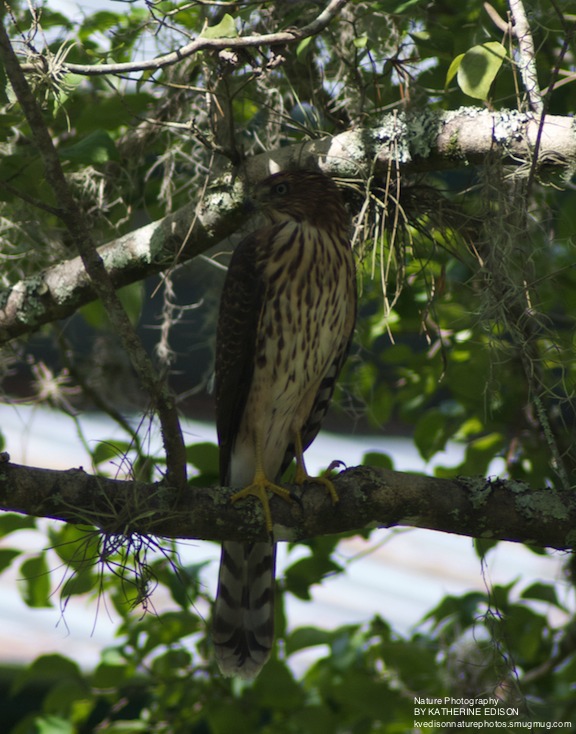
Birds know about the feeders in our front yard. With the move pending, I have downsized from 4 feeding stations in front and back to just one in the front and it has been hilarious (and a bit sad) to see the birds jostle to fit themselves in the much smaller space. I decided the other day that it was like watching a clown car in reverse. One dove flies in and knocks another off a perch, followed by a Bluejay, followed by yet a Cardinal and so on. Only the Crows seem to have been left out, because they can no longer stand on the platform and inhale suet. I'm sure they'll find a way, though. Crows are smart. The front yard feeders have been enormously satisfying and we set them up in front of our dining room so we could watch them from the table while we eat. Besides the usuals (Cardinal, Titmouse, Woodpeckers, Mourning Doves...) we get the seasonal visitors such as Orioles, Goldfinches, Chipping Sparrows, Pine Warblers, White Wing Doves and Catbirds. Occasionally a hungry migrating bird will stop by and I've seen Indigo and Painted Buntings and a Rose Breasted Grosbeak. The hawks hunt doves in the yard and in the winter Cooper's Hawks can be seen perching on top of the feeders. Mockingbirds used to nest in the Confederate Jasmine by the corner, but wised up and moved after losing chicks to cats one too many times. They teach their young to come to the feeders as soon as they fledge. When we moved to the house 10 years ago Red Headed Woodpeckers were regular visitors to the feeders, but that ended when the neighbors across the street cut down all of their pine trees. I had hoped that they would just find new trees close by, but they moved on. Mississippi Kites nested on our street for a few years, too, but they have not been back for a while. I'm not sure why. They still fly over but nest somewhere else. I was worried about what would happen to the birds that have come to rely on me for their food when we move away and finally decided to leave behind some feeders for the new owners.
 |
| Bird Clown Car |
 |
| Baltimore Oriole |
 |
| Cooper's Hawk |
 |
| Juvenile Mockingbird |
 |
| Mississippi Kite Adult and Juvenile |
The native bees really like the garden. Bumblebees, wasps, honeybees, sweat bees, bee flies and many other insects buzz the blossoms and nest in the bee houses that I set out for them. The leaf cutter bees chew perfect round holes, especially out of Red Bud leaves. The honey bees compete with the Orioles at the jelly feeders. Carpenter bees, with their "shiny hinies" wiggle down deep inside the Azalea blossoms in spring. I have not seen many grasshoppers or katydids in the garden, but there are many kinds of dragonflies and damselflies, butterflies, moths and spiders. Golden Silk Orb Weaver Spiders established a colony on the side of the house and I try to ignore the huge cobwebs and egg sacs they leave behind each winter because I want them to return.
 |
| Sweat Bee on Green Eyes (Berlandiara subacaulis) |
 |
| Common Green Darner Dragonfly |
 |
| Basilica Spider |
 |
| Grass Mantis |
 |
| Golden Silk Orb Weaver Spider After the Frost |
 |
| Lacewing Eggs |
Besides the big spiders, the side yard is a haven for Chickadees, Northern Parulas, White Eyed Vireos and Bluejays. Thick leaf mulch from the debris we blow off of the roof is full of bugs for Carolina Wrens. The Thrashers don't go to that side of the house, maybe because they prefer to toss leaves on the pathway! Hummingbirds fly in to buzz the flowers in the front yard, then retreat to the branches Crape Myrtle, far away from me and my big scary camera lens. Late at night, Barred Owls call from the Live Oak that stretches over the house. I have seen Raccoons up there, too.
 |
| Ruby Throated Hummingbird |
In addition to wildlife and koi, there are also our pets--2 dogs and a cat. Clyde and Lola, the dogs, enjoy chasing off squirrels but have not caught any. Clyde is afraid of the Owls and stands close to the door when he hears them. They bark at stray cats that come into the back yard and probably help keep otters away, too. But mostly they lie on the patio in the sun and snooze with one ear cocked, listening for any danger from which they they need to protect us. Dedos, the cat, watches birds and squirrels from his window perches all around the house. He makes funny little chirps and "mewps" while he watches them feed or hop on the ground, as if they are just too much for him to bear. He is very disturbed when he sees cats in the yard and races from window to window trying to get a better look. Dedos likes to watch me when I am outside.
 |
| The Pooches |
 |
| Watching... |
It's been a fun yard and we've shared it whenever we could. A Mockingbird nest researcher documented the birds in the Jasmine. A Zebra Longwing researcher studied the ones that clustered in the bamboo at night. The yard was part of a 3 year long native bee and pollinator study (Plant for Wildlife) and has been on the Florida Friendly Landscape tour 3 times. I've passed on extra sprouts to anyone who would take them, and tadpoles from our pond and caterpillars from the yard gave young visitors at Morningside a demonstration of metamorphosis. I have lots of great memories. It will be sad to say goodbye, but there is a new yard waiting for me. It's a good feeling to leave behind something so beautiful and full of life.
 |
| 3 Stages of Monarch Life |